Learn how to make pure tallow soap from scratch using 100% grass-fed beef tallow. Simple cold-process recipe, with tips for beginners and FAQs answered.
Quick Answer
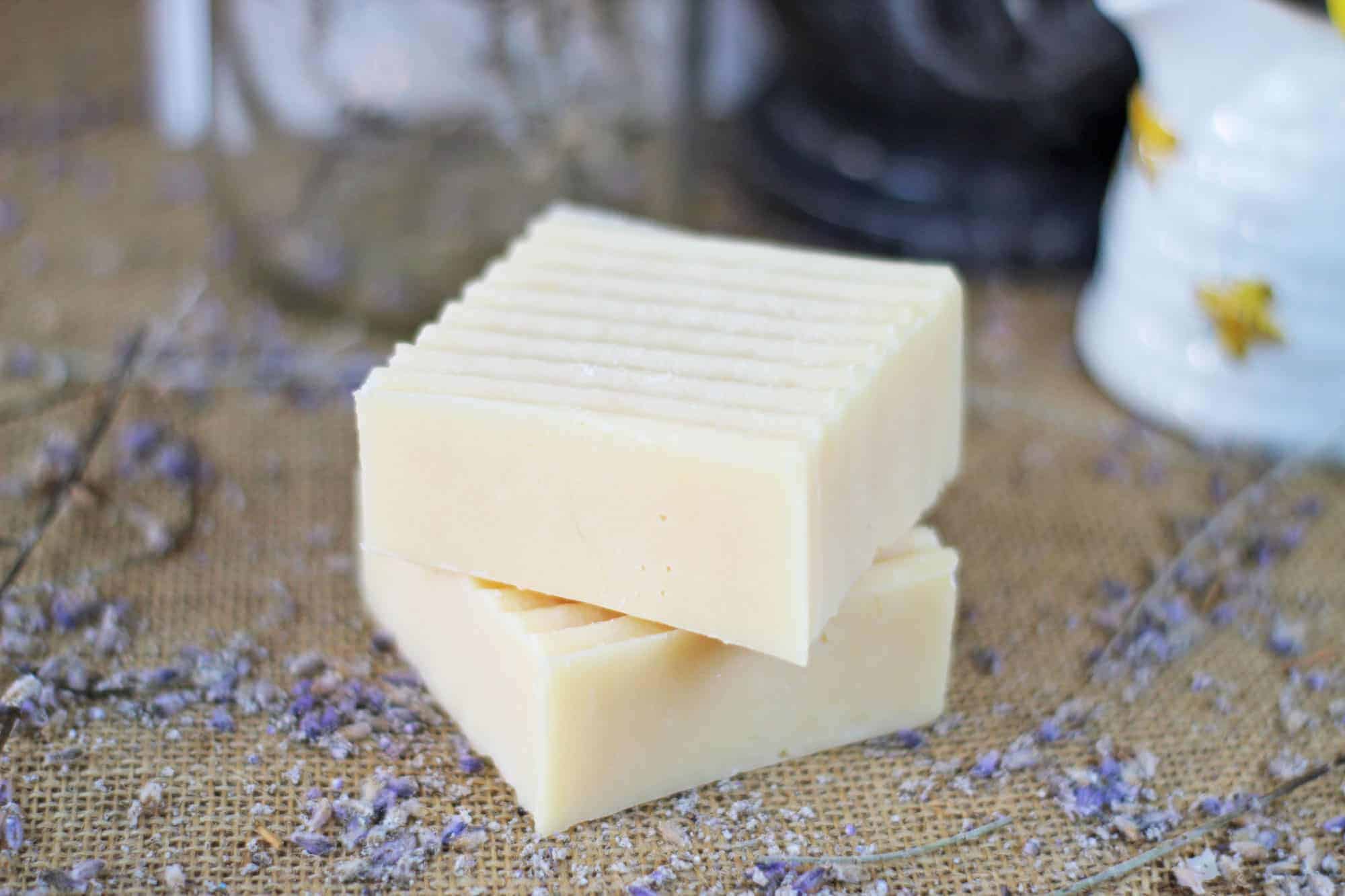
What is pure tallow soap? Pure tallow soap is a traditional bar soap made with 100% grass-fed beef tallow as the only oil. It is rich in fat-soluble vitamins A, D, E, and K, and makes a creamy, long-lasting bar that is nourishing for skin. This recipe uses simple ingredients: rendered tallow, lye, and water.
Pure tallow soap recipe
Grass fed tallow fans will love this pure tallow soap recipe. It’s very easy, so it’s perfect for anyone wanting to learn how to make soap from scratch.
I have a skincare shop (which you can check out here). I’ve been making soap with a blend of tallow, coconut oil, and olive oil for a while. It’s really nice! All of the oils compliment and enhance one another. However, I kept getting requests from my shop customers for a pure tallow soap. In answer to those requests, I created this pure tallow soap recipe.
Pin it for later
This post contains affiliate links, which means I make a small commission at no extra cost to you. Get my full disclosure here.
Why Use Tallow for Soap Making?
If you’ve spent much time following me, you already know that I love grass fed beef tallow. It’s such an amazing thing. Grass fed beef tallow contains an incredible amount of nutrients that are good for skin.
I talk about what tallow is here, and why skin loves grass fed tallow here. You can read even more in depth about the benefits of beef tallow here.
Tallow is an ideal fat for soap making. It is readily available, provides hardness and creaminess to the finished soap bars, and is wonderful for skin. I love using it either on its own in this pure tallow soap recipe, or along with a blend of other oils.
For more info on all the reasons why I love to add tallow to my soap recipes, check out this post on why add tallow to soap here.
If you’re already rendering tallow and making your own soap, there’s a good chance gut wellness is already on your radar too. Tallow isn’t just incredible for skin, it’s one of the most nourishing fats you can cook with on a healing diet like GAPS. If you want to learn how ancestral fats, fermented foods, and real food cooking can support your family’s health, grab my free gut wellness guide here →
Tallow soap is just one of the many ways this remarkable traditional fat can serve your family. For the complete guide to every beef tallow use, head over here, you’ll find tallow recipes for cooking, skincare, hair care, candles, leather conditioning, and so much more.
What Makes Tallow the Best Fat for Soap
I also love the fact that our homesteading ancestors made tallow soap like this for their own use. It’s kind of like a step back in time to make it ourselves today.

Soap Making Safety: What You Need to Know
If you’re new to making soap from scratch, there are a few safety precautions to keep in mind. Soap making uses lye in order to turn the oils into soap. No lye is left over after the soap making is complete and the bars are cured, so there’s no reason to worry about that. However, during the soap making process, we do have to handle the lye, and it’s important to use some care.
Lye is extremely alkaline, and the lye water or liquid soap mixture can burn skin if some splashes on you. I recommend wearing gloves, long sleeves, and eye protection when working with lye. Also, when the lye is mixed into the water, there are some fumes that are produced. For this reason, it’s best to mix the lye water outdoors.
That’s it! I know that these thing can seem a little bit intimidating at first, but don’t let that stop you from getting started with learning how to make soap from scratch. It’s such a fun thing to do once you get comfortable with it. If you follow the safety procedures, everything will be fine.
In this post here I go over the soap making process, and talk about all of the equipment you’ll want to have on hand. I recommend checking that post out before you begin.
How to Customize Your Tallow Soap
Like so many other DIY skincare items that you can make yourself, this pure tallow soap recipe can be personalized with different essential oils. You can do a single scent, or get creative and use a blend of essential oils.
It is good to keep in mind that certain essential oils come through better as soap scents than others. Citrus oils are often too mild to scent soap well. Some of my personal favorites are peppermint, lavender, and lemongrass.
Of course, you can also leave out the essential oils altogether, and it will be just like a traditional homesteader’s tallow soap. People with very sensitive skin might find that they like the unscented version best, too.
Why I make these recipes
Making soap from scratch with real tallow is one of those quiet, satisfying acts of caring for your family the way our ancestors did. I share these recipes because I believe traditional, ancestral ingredients (the ones our grandmothers used) are some of the most nourishing things on earth, for skin and for the whole body. The same philosophy that healed my gut and cleared my acne, fatigue, and migraines is what’s behind every recipe here. If you want to understand why tallow is such a powerful ingredient (and not just because it’s natural), here’s the bigger picture.
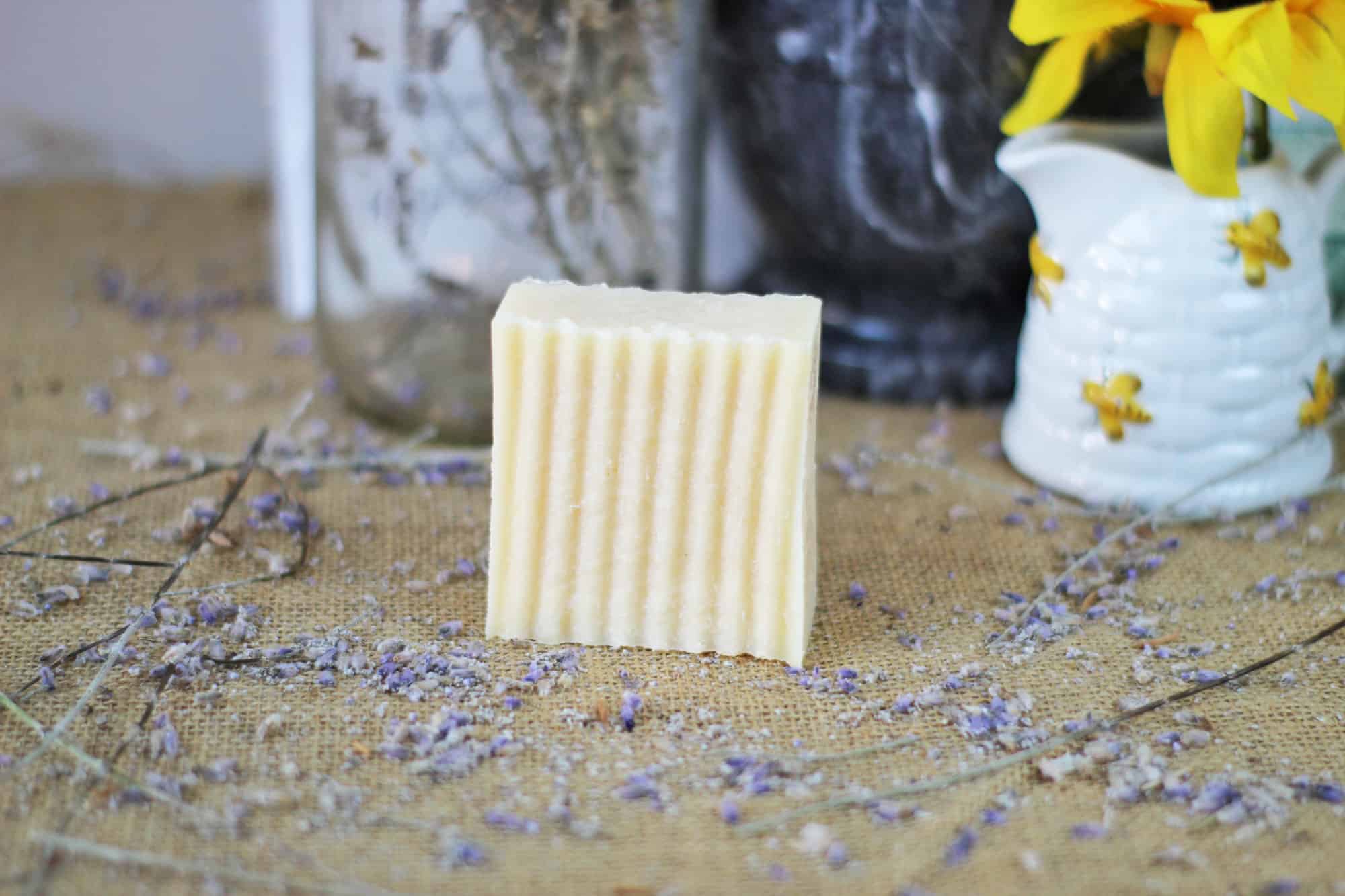
How to Make Pure Tallow Soap: Step-by-Step
Ingredients:
- 32 oz. tallow
- 4.2 oz. lye
- 12.16 oz. water
- 1.5 fl. oz. essential oils (optional)
Instructions:
- Weigh tallow and put into a crockpot. I find it is easiest to melt the tallow before weighing it. If the tallow is below 100 degrees F, turn the crockpot on low to gently heat the tallow.
- Weigh the water in a heat-safe container or sturdy plastic bucket, and weigh the lye separately.
- Check the temperature of the tallow. You want it to be 100 degrees F. Let tallow cool if necessary.
- Once the tallow is 100 degrees F, take the lye and water outdoors. Wearing gloves and safety goggles, carefully and slowly pour the lye into the water. Stir gently.
- Once the lye water has turned from cloudy to clear, leave it to cool for 10 minutes.
- Carefully pour the lye water into the tallow.
- Use an immersion blender to mix the soap. After a few minutes, it will grow creamy, and start to thicken. Mix until it has reached “trace,” the light pudding consistency.
- Add the essential oils (if using) and blend again to incorporate.
- Pour soap into molds, top with wax paper, and wrap molds in towels.
- After 24 hours, remove soap from the mold and slice it into bars. Let cure in an area with good airflow for 4 weeks.
I put 50+ of my best tallow and natural living recipes together in one place. Soaps, lotions, natural remedies, mom-and-baby products — all made with the same simple, pure ingredients you already love. It’s a beautiful full-color, 92-page book, available in print or as a digital download.
Frequently Asked Questions
Tallow soap can be wonderful for skin because tallow’s fat profile is very similar to the natural sebum our skin produces. Grass-fed tallow is rich in fat-soluble vitamins A, D, E, and K, which many people find supportive for skin health. In my experience, people with sensitive and dry skin often do especially well with it.
All real soap requires lye (sodium hydroxide) to go through saponification, which is the chemical process that turns fat into soap. Once the process is complete, no lye remains in the finished bar. If you want a lye-free option, look for melt-and-pour soap bases, but those are technically not true cold-process soap.
Tallow soap bars are quite hard and long-lasting compared to vegetable oil soaps. They typically cure for 4-6 weeks before use, and a well-made tallow bar can last for weeks in the shower with proper drying between uses.
Rendered tallow, especially the odorless white variety made using the wet rendering method, has very little scent of its own. Your soap will mainly smell like whatever essential oils you add. If you leave it unscented, it has a very mild, clean, neutral scent.
Many people find that simple, tallow-based soaps work well for sensitive and eczema-prone skin because they have very few ingredients and no synthetic additives. Tallow’s fatty acid profile closely matches human skin’s natural oils. As always, everyone’s skin is different, and it’s worth doing a patch test first.
Grass-fed beef tallow is the ideal choice because it has a richer nutrient profile than conventionally raised beef fat. You can render it yourself from suet, or purchase rendered tallow from a trusted source. I always recommend sourcing the highest quality you can find.
Have you tried soap making yet?
What kinds have you made? If you’re new to it, does this make you want to try making soap?
Join our traditional wisdom community, and grab a FREE DIY Personal Care Recipes eBook when you subscribe!

How to render tallow
How to Render Tallow with the Easy Crockpot Method
Shop this post
Grass-fed beef tallow
Lye
Plant Therapy lavender essential oil
Scale
Immersion blender
Soap mold & slicer
Want to pick up a handmade tallow soap?
Check out the Bumblebee Apothecary Shop here.
Follow along with Bumblebee Apothecary
Thanks for stopping by! Be well!
If you make this recipe and love it, please give it 5 stars! Also, tag me on Instagram @bumblebeeapothecary
Pure Tallow Soap
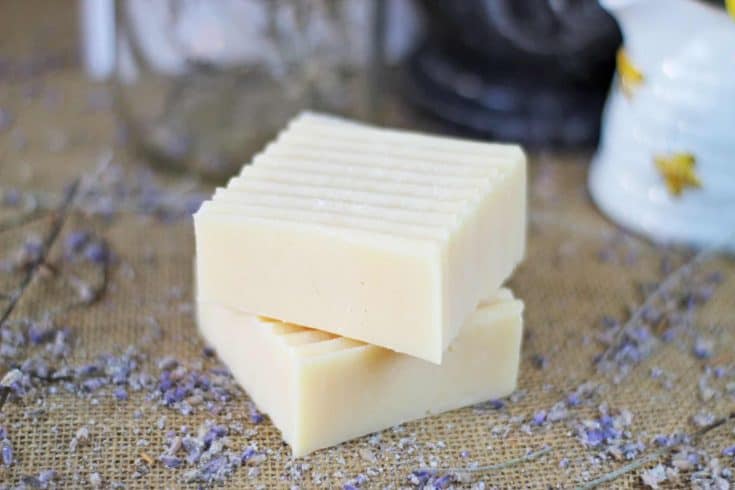
Learn how to make pure tallow soap from scratch using 100% grass-fed beef tallow. Simple cold-process recipe, with tips for beginners and FAQs answered.
Ingredients
- 32 oz. tallow , by weight
- 4.2 oz. lye , by weight
- 12.16 oz. water , by weight
- 1.5 fl. oz. essential oils , optional
Instructions
- Weigh tallow and put into a crockpot. I find it is easiest to melt the tallow before weighing. If tallow is below 100 degrees F, turn the crockpot on low to gently heat the tallow.
- Weigh the water in a heat safe container or sturdy plastic bucket, and weigh lye separately.
- Check the temperature of the tallow. You want it to be 100 degrees F. Let tallow cool if necessary.
- Once tallow is 100 degrees F, take the lye and water outdoors. Wearing gloves and safety goggles, carefully and slowly pour the lye into the water. Stir gently.
- Once the lye water has turned from cloudy to clear, leave it to cool for 10 minutes.
- Carefully pour the lye water into the tallow.
- Use an immersion blender to mix the soap. After a few minutes, it will grow creamy, and start to thicken. Mix until it has reached “trace,” the light pudding consistency.
- Add the essential oils (if using) and blend again to incorporate.
- Pour soap into molds, top with wax paper, and wrap molds in towels.
- After 24 hours, remove soap from mold and slice into bars. Let cure in an area with good air flow for 4 weeks.
Recommended Products
As an Amazon Associate and member of other affiliate programs, I earn from qualifying purchases.


The soap seemed to reach trace awfully fast and I think it went beyond where I should have put it in the mold. The leftover residue in the pot (less than 24 hours later), is brittle. I’ve been making soap for over 20 years. What went wrong? (Used home rendered beef kidney fat and Sodium Hydroxide/NaOH, no essential oil). I tried check at soap Calc (which I’ve used before) but kept getting a 504 error instead of the recipe after plugging in the info.
I’ve used the recipe twice now. The soap turns out well (it cleans!), but I have had trouble getting it to “trace”. I think I’ve been careful with temps and measurements. The mixture thickens a little, but never looks as thick as the pictures or videos.
The fat I use is trimmings from the various cuts of beef. I haven’t been able get my hands on leaf fat.
Any suggestions would be appreciated.
I just made this soap yesterday morning and cut it this morning using a knife but it was crumbly. I switched to a wire cheese cutter and that did a much better job. Wondering if you’ve ever had issues with it being crumbly? Was waiting 24 hours too long? It did seem to firm up quick in the molds. Thank you!
Is 1.5fl oz of essential oil about 3 tablespoons?
Hi I was wondering if you have a recipe for pure tallow no other oils liquid soap please? I’ve watched your other video but you include coconut and olive oil I was hoping I could make it with just tallow? Same method and measurements of glycerine and potassium hydroxide lye? Thanks! ☺️
Sorry if this has already been asked. What size molds do you use for the 8 bar recipe. The link for your molds doesn’t work so I can’t compare. I assume it’s a 3lb mold??
Hi Marissa.
I love your recipes and advice.
I have read through all these messages and didn’t see an answer to a question I have.
After making this soap just now, when washing up everything was still very fatty, greasy feeling. Is this normal?
God bless
Mon
You state the fats need to be at 100°F but what about the lye? Should the lye be at 100°F as well? Thanks
How many bar soaps does it yield per recipe?
Could this be used as a shampoo bar?
I’m also wondering if anyone has used this as a shampoo bar? And how did it work? I think I might be allergic to coconut oil and most shampoo bar recipes call for coconut oil.
I use it as shampoo & it’s so great that I got both my mother and my mother-in-law hooked on it.
I know this question was posted 8 months ago but I wanted to let you know that my family has been using nothing but homemade tallow bar soap for shampoo for almost a year! We love it.
Hi, is this recipe considered hot, or cold processed soap? Thanks!
Cold. Hot process doesn’t have to set to cure for 4 weeks.
This is cold process.
Do you have to use an immersion blender or can it be accomplished over a longer time by stirring it?
The immersion blender will help you reach trace much quicker than hand stirring.
Had stirring will take much longer to reach each trace.
Can I use goat milk instead of water an pig lard instead of beef tallow in the soap recipe how much goat milk how much pig lard
Ingredients can be substituted but the chemical reactions may differ and you may have to alter quantities of the ingredients in the recipe for it to work saponify (come together) adequately.
Hello,
I went past trace. Is it possible to salvage the batch after that happens? I’d also like to know about the clean-up process. Will my crock and all the tools that came in contact with the soap/lye mixture be usable again for everyday use if I was with soap and hot water or do they need to be exclusively used for soap only going forward?
Your equipment can only be used for soap going forward since it has come into contact with lye.
Not true, Lye is water-soluble and should easily rinse away after reacting with the oils during saponification. As an extra measure, you can clean with vinegar and run it through the diswasher – it’ll be fine.
I see that you’re meant to put the water in a heat safe container, and after adding the lye “allow it to cool for 10 minutes.” But I don’t see anywhere that the water should actually be hot/what temperature it should be? I see to heat the tallow to 100˚F… but nothing for the water. What am I missing?! Thank you!
The water and lye should be the same, around 100ºF 🙂 If you follow the directions and let the lye water sit for 10 minutes, it should be around the right temp.
You didn’t mention anything specific about temp for the water. Teanna asked my question about that.
Now I see Jen disagrees with you about hearing the water…
Hmm. What to do?
Hey! I think the writer of this misunderstood your question! Don’t heat the water to 100° The lye creates a chemical reaction that heats the water. Use COLD water and add the lye to that! It could probably be pretty dangerous to add lye to hot water! I hope you see this before you make the soap:)
measure your water, then carefully add the lye in. Try in a food grade bucket outside and stir until the lye is dissolved. The lye will actually heat the water so no need to heat water by itself. Once the lye is 100 degrees, you should heat your tallow to 100 degrees also, and then slowly add the lye mixture into the tallow oil and then add your essential oil. stir using a stick blender emersion until you come to a slight trace in the batter. Use a silicon spatula to finish bringing it together gently. then pour it into your molds. Most of all have fun!
Thank you! Great content.
By the way, the affiliate links for the lye and the mold are no longer active seller links.
Thank you, I will go fix these!
Hi Marisa!
Do you have any experience adding calcium bentonite clay to the tallow soap recipe? I have your recipe down pat and the whole family LOVES it! Now I would like to try adding the clay, but I assume bentonite clay changes proportions somewhat due to its water absorption rate. Thanks for any insight!
I have made this soap a few times and I love this recipe so much! Thanks for sharing!
I just cut the soap I made yesterday and it smells wonderful! This recipe is a dream! Can’t wait to use it in 4 weeks or so!! First time ever making soap abs it was a success! My toddler and baby will love not using store bought chemical ridden soap on their delicate skin. Thank you
I don’t mean to ask dumb questions, but just to clarify, I need to render my beef fat first, correct? Thanks!
From my understanding yes so you get all the water out of it. So it prevents mold growth.
Yes you do
No question is dumb if you don’t know the answer. Yes, you render it first. The process of rendering is what changes a raw fat into what we call tallow.
How do you get the beef scent out of your tallow? I have been rendering multiple times for what feels like days and it still smells terrible in my opinion.
For less of a beef smell, I process with water and salt a couple of times. Do not let the “bits” from rendering turn brown for the first render,or the smell will never go away. It will be great for cooking but that’s it after that.
How many of the soap molds will I need to make this? I want to make sure I have enough molds before I start this recipe!
Thanks!
This recipe will fill up one mold!
Thank you for posting this recipe! I would like to add lavender pedals to my soap, when would I do that?
I add it at the end after I have incorporated the essential oil and it works perfectly!
Can I use goat milk in place of water an how much thank you Debra
Can I use my goat milk in place of water in your tallow soap recipe and are the measurements the same
Lavender buds will turn brown. Not meaning to sound gross but they will end up looking like mouse poo.
Hi Marisa, I’m just making this today even though I’ve been watching your videos for a couple years. Thanks for the recipe and video. I do have a question now that I made it – what happens if the tallow is over 100 degrees when you add the lye water? Just wondering.
I think mine actually reached trace very fast and then when I added the essential oils it was very thick. Thank you so much for all you do! I can’t wait for it to cure. I enjoy watching you and the kids! Blessings
The same thing happened to me when I made the soap for the first time yesterday. Once I added the lye it thickened immediately on its own. I took it out of the mold today and the bottom of it had air pockets. Am I suppose to kind of push it down into the mold once I pour it in?
I love your soap recipe and have made it several times. I have tons of leftover whey from cheese making. Do you think I could use that in place of the water in this recipe? Thanks!
Hi Marisa, would this recipe be the same for making tallow soap via hot process?
I just made this recipe! First time making soap of anytime. After the 24 hours I cut it and it just crumbled. Any thoughts or suggestions on where I possibly messed up? Will it still be ok to use after it cures?
Thanks!
The same thing happened to me. I think I either added too much lye, or I mixed everything up after it had cooled too much. It still works well though! Perhaps you made the same mistake.
My tallow is on the soft side…will it affect the outcome of the soap?
Thank you for your recipe, I will be making this soap and I only have one mold (42oz) are the amounts of this recipes for 1 mold, or am I going to need another one?
hi Marisa,
It looked like you filled a fourth pink soap mold in addition to the other three rectangle molds needed for a triple batch-can you link this one?
thanks!
natalie
Here you go! https://amzn.to/3AuAxr9
Marisa,
Very grateful for your recipes. We have made many of your and they all have workout perfectly. We have rendered our own Australian beef fat as per your recipes, we have a swap with the butcher, tallow for soap! He and his wife really like the soap, shampoo bars and face cream, so thanks again. It certainly stings if it gets in your eyes even after 12 months of hardening, however, it has a wonderful lather and our hair and skin is so different after using your recipes, we miss it when we run out, so making another batch today. Thank you.
Thank you! That’s wonderful, thank you for sharing! Yes, most soap will typically sting the eyes, that’s normal. Thank you again!
Hi there, thank you for all the recipes and useful info on your site! Are all your soap recipes 5% superfat?
My soap recipes are 8% and the shampoo bars are 5% 🙂 Thank you!
hello marisa, I wanted to tell you what happened to me, maybe someone can help me, from the beginning everything went wrong, the fat took more than 20 hours to melt, (it never finished melting), the last step took more than two hours to melt the fat, and it was salty, I used a digital fork style thermometer and it read 126 f, the fat was so cold that I could touch it with my fingers, to remove the saltiness I put it in a pot on the stove with a lot of water for an hour, and it worked, I thought my slow cooker doesn’t work, but when I wanted to make the soap, I melted it in a pot on the stove, I used three thermometers, one deep fry, another similar to a nail and the other similar to a digital fork and they all marked more than 120f, the problem is that it marked that, but it felt cold and almost turned white, when I put the fat in the glass mold to beat, the edges were immediately compacted, I beat for a few seconds and before putting the essence it was already the dough almost completely compacted, I put distilled water, lye (4.02 ounces) beef suet, the lye did go down in temperature, the fat took a long time to go down but it felt cold at 100f and almost white, sorry for such a long anecdote, thank you
Did you render your beef suet / fat down into Tallow before attempting to make the soap? Because you needed to. You can’t use fresh beef fat to make soap. It has to be rendered down first to remove all of the water and impurities.
Thank you for the great information. I have been contemplating getting into soap making for many years and I am finally at a place where I have time and some extra money to start a new hobby. I was thinking of using your recipe but incorporating pumice, coffee grinds, or walnut shells into it to make a mechanics soap. I use to work in a steel mill and the only way to get clean was Lava soap that you dipped in Borax. Anyway, is there a guide or something I could purchase on changing the recipes around when adding ingredients to still have a safe product?
That’s great! I think that’s a wonderful idea. I haven’t experimented with that yet, but when I do, I plan to do some internet searches for similar recipes to get ideas for amounts. I don’t think you need to change the oil, lye, or water portions of the recipes at all, but the bulk may be more, so you might need bigger molds for pouring it. Let me know how yours turns out!
Hello! I tried the recipe today using Wagyu Beef Tallow that I found on Amazon. It was very fluffy and white and I was not sure if this was the right tallow to use. I followed the recioe but I fear my temperatures were too high. I tried to get to trace but it was so watery and thin. I decided to add an ounce of piwdered milk and about 2 oz of shea butter and then like magic, it reached trace and thickened beautifully. I notice it is gelling in the mold and atill jiggly. I am not sure if the temperatures threw off the chemistry or if I used the wrong beef tallow or what the issue was that prevented me from getting to trace faster with having to add any extra ingredients. I appreciate your help! Thanks so much. I will know more in 24 hours or so as to how it came out.
I haven’t used that tallow but I think it would work! Hotter temperatures will take longer to come to trace. Let me know how it turns out!
This is incorrect – if the temperature is too hot, it will go to trace more quickly and you have a chance of it thickening too fast. Wait until it’s at least 110F.
I did your recipe last night and just cut my 24 bars of pure tallow soap. I can’t wait for the 4 weeks to try it. BTW really enjoy that you let your children in your videos. That’s wonderful! I also made 1 batch of deer tallow soap and I will let you know how that goes
Oh wonderful! Yes, I’d love to know how the deer tallow soap turns out, I bet it will be very nice. Thanks for the kind words!
When you are “curing for 4wks” do have to spread them out on a sheet pan (or such)? Do I have to wait the 4wks to wrap them and/or use them?
Yes, I put mine in a cardboard box and make sure there is plenty of airflow around them. Cold process soap takes 4-6 weeks to cure, and during that time the lye converts the oils into soap. You do need to wait at least 4 weeks, because unconverted lye could burn skin. Hope that helps!
What if I do my own lye using the ashes from the fireplace? How much of this liquid should I use? Thanks
I’m not sure, I haven’t made it that way before. Sorry I can’t help more!
Can I double this recipe?
I’ve made it with ash lye. I think the best lye ph for soap is 7 (do double check that online). Buy some ph test strips and use them to test the ph of your ash lye. If more than 7, dilute with water. If less then 7 make stronger with not ash. Once you get it to 7 then use correct measurement as per your recipe.
Hello again, CORRECTION to my earlier reply. The ideal ph for soap-making is 8, NOT 7. Sorry for the mistake.
I just made your DIY tallow face cream! Amazing! Thanks for the recipe!
But I recently bought a bar of tallow soap and it lathered up really well but my skin was dry and tight and felt gross afterwards. I was expecting my skin to be soft and supple. Am I wrong to expect that? I ask because I don’t want to make this soap if it’s going to dry my skin. Thanks!
Great, you’re very welcome! As for the tallow soap, it depends on the recipe. My recipe doesn’t leave our skin dry at all, it’s very hydrating. If the soap you used had a large amount of coconut oil in it, that could be quite drying to skin. But tallow in soap is gentle and hydrating to skin, especially with an 8% superfat like my recipe. Hope that helps!
I just made a batch of this soap and it was super bubbly on top. If you have time, could you tell me what I did wrong? This is my first time making soap and I have no idea what I’m doing lol. It ended up being super bubbly and a little greasy. But obviously it’s not cured yet.
I’m happy to help! Are you referring to bubbles in the soap mixture in the mold? I tap my mold down a few times to get rid of bubbles and air pockets when I pour the liquid into the mold. With cold process soap it takes time for the lye to convert the oils into soap, which is why we have the 4-6 week curing time 🙂
Can you double or triple this recipe? Would I just take each individual ingredient and multiply it by 2 or 3? I’m newer so not sure if it’s similar to baking or not. Thanks
Yes! I triple it all the time. You can double or triple it. Just multiply each ingredient by 2 or 3. It still works great 🙂
Thank you soooooo much!!!! Whoohoo
What super fat percentage is this?
8% 🙂
silly question, but what does that mean?
Do you have a recipe for tallow soap that uses a small amount of sunflower oil? Thanks.
I don’t yet, sunflower oil wasn’t one I was planning to use. You can design your own recipes with soapcalc.net though 🙂
We’re planning to make our first batch next week. Can I use my crockpot for food after making soap? Run it through the dishwasher?
I personally use separate equipment for soap making, but in my research I learned that it’s fine to run everything through the dishwasher and then use it for food. Hope that helps!
What size mold does this fit? I have 2 42 oz molds, these looks kinda close to that.
Question 2 – this looks different than the 40% fat, 35% water, 5% lye percentage I have seen somewhere else, is this is because it is tallow?
Many thanks, I am excited to try this.
The mold I have is linked in the blog post under “shop this post.” 🙂 I’m not sure, it might be because this one has 8% superfat. Enjoy!
Hello. I have been making tallow/coconut oil/olive oil soap for a few years. I’m running out of my tallow from the butcher. Because of COVID, I’m not able to get more from him. I found a source for tallow sold to restaurants for cooking, but it had preservatives in it. Would this alter my soap if I use it?
Sorry to hear that, I’ve had a harder time getting tallow lately, too. I’m not sure, as I’ve never used tallow with preservatives. Sometimes you can find beef fat or rendered tallow online: https://grasslandbeef.com/?affId=217057 Hope that helps!
Hi, can I add clays to this all beef tallow soap recipe and how much? Thanks
Hello, yes you can, you can just add the amount you want on top of the existing recipe. The amount depends on what texture and color you’re going for. Hope that helps!
Hello there,
Tallow has been traditionally used in my country for soup making for laundry mainly though, and skincare. 🙂 Nice to learn about your methods of care.
What is the pH of your bars after 4 weeks, please. If i calculate right, your Lye Concentration is 34.53%:65.47%.
That’s great to hear, thanks for sharing! I’m not sure, I’ve never measured the PH after they’ve finished curing. Sorry I can’t answer this more specifically!
Someone else just shared that when they tested the bars, they’re around 8 🙂
Hi! A couple of comments on the soap making: I don’t remember seeing you indicate that it’s best to use distilled water not tap water. Also 12 ounces (weight) of water is 12 fluid ounces of volume – so in this case the 12.15 ounces of water is really a little more than 12 fluid ounces – a cup and a half. Thanks for the info on deodorizing the tallow. I have done it with beef, pork and deer. The deer actually is my preference. So if you have friends that hunt have them save the fat for you as they process the meat.
Thank you for the tips!
Is tallow soap a good choice for laundry or will it damage my machine?
You can, but you’d want to make a different recipe that has no superfat left over. Hope that helps!
I saw someone ask about adding ingredients like milk and maple syrup as additions to your recipe, which would change the ratios. But what about substituting the water with milk? I read elsewhere that the liquid can generally be switched out. Just wondering if you’ve ever experimented with that. Thanks!
I haven’t tried using milk instead of water, but from what I’ve seen, I think would work to interchange them. 🙂
Today I did make the tallow shampoo and body bar using goat milk in place of water. It turned out well! Love that recipe!!!
Wow, thanks for letting me know! That sounds so nice, I will have to try it! Thanks again for the update 🙂
Hi There,
I used your recipe for pure tallow for cold process.
Same amount of tallow and water.
The soap came back too brittle and I found some orange spots on it.
Did this happen to you ever or did it Happen because I used the cold process method.
Would it make a difference if I use Deodorized Tallow on the cold process?
Thank you kindly.
Hello, I’m happy to try and help! I haven’t had that happen before, but when soap is crumbly it means there is too much lye. My recipe is meant to be for cold process soap, so that shouldn’t be a problem. Did you weigh all ingredients with an accurate scale? Did you make any substitutions? Using deodorized or non deodorized tallow shouldn’t make a difference as far as I know.
Can I use homemade orange peel powder in this?
I haven’t tried that, but I think it would work! Sounds lovely 🙂
Hello:
I am an experienced soap maker wanting to re enter the soap making world with your beef tallow recipe.
I noticed you said 12.16 ozs of water … does it need to be that exact?
Thank you
Lisa
That’s technically what it should be, although it is hard to get it that exact. I just try to get it as close as I can, and it always turns out 🙂
Hi
If it’s allowed can you please send me an email I need some advice about tallow and would appreciate your help.
Kind regards
Ria
I’m happy to help! Under the “about Marisa” tab at the top of my website there is a contact form. Feel free to send me a message there 🙂
I recently made tallow soap and had it reach false trace almost instantly when I added the lye solution.
My tallow & oil were at 115 degrees and my lye solution was at 115 degrees.
Any ideas why this may have happened?
Hmm… I’m wondering if maybe 115 is too hot. I try to have both be at 100ªF. I hope that helps! If you try it again, let me know how it goes! I’m happy to keep helping.
I tried it at 100 degrees fahrenheit for both and it was better, but I still had the thickness problem.
I’m going to try again with more water in my lye solution.
Okay, that’s interesting. Sorry to hear the thickness problem is still there. Let me know how it goes with adding more water.
I tried once again using more or less your original recipe and it worked great!
I had modified the recipe slightly to be 5% superfat rather than 8% and 26.5% lye solution rather than 25%.
Once I made it again with 8% superfat and 25% lye solution it worked great! I had plenty of time to stick blend it before tracing and it poured into the molds beautifully.
I learned a lot through my mistakes as well.
Thanks for the great recipe! 🙂
Oh that’s wonderful! I’m so glad you were able to get it to turn out. Thanks so much for the update. I hope you like it at the 8% superfat. You’re very welcome! Enjoy 🙂
Do you let your tallow soap gel or do you try to prevent it from gelling? I noticed your bars look very white.
It does go through the gel phase while it is in the molds, but as it cools/cures further it becomes more white looking. Hope that helps!
What is your SF% Looks creamy. Thank you
It is 8% 🙂
I made two batches today, one in a square loaf and the other in a tub. The square is already hardened, and it hasn’t been anywhere near 24 hours. I am impressed with the simplicity and stress-free approach–just one oil. I have untold jars of home-grown tallow, so this recipe is great. I hope the lather is good. That’s the only thing that gives me cause to pause. I’ll let you know.
Oh wonderful! I also love how simple it is. Let me know what you think of it when you use it 😊
I have a small soap factory but I am unable to make soap from tellow I use tellow and cocofatty but my batch cause big hard rice shaped spots .How it can be cured pls help
Rice shaped spots, if they’re white, sounds like unconverted lye, which is aesthetically unpleasing, but also can burn your skin. If that’s the case, try decreasing the lye by 2-4% until you perfect your recipe. Saponification values differ for different types of tallow (cow, deer, sheep, etc), so you might have a recipe for a different tallow.
I really want to try this! If I wanted to add other ingredients such as milk or buttermilk or maple syrup how would I go about doing this? I would probably need to adjust the ingredient ratios I am assuming?
Yes that’s right, you’d have to adjust them a bit. I would go over to soapcalc.net you can enter in the ingredients you need. The calculator there will help you figure out how much to use of each ingredient to get the properties you want 😊
Okay, great! Thank you. 🙂
You’re welcome! 😊