

By Marisa Tolsma, Certified GAPS Coach | Bumblebee Apothecary

Quick Answer
The GAPS diet food list centers on nourishing, easy-to-digest foods: homemade meat stock, fresh meats and fish, eggs, animal fats, non-starchy vegetables, fermented foods, and (on Full GAPS) fruits, nuts, and honey. It avoids all grains, refined sugar, starchy vegetables, some beans, processed foods, and industrial seed oils. Below you’ll find a complete printable GAPS food list of what to eat and what to avoid, plus the stage-by-stage GAPS Introduction Diet food list.
Pin it for later
This post contains affiliate links, which means I make a small commission at no extra cost to you. Get my full disclosure here.
GAPS Diet Food List (Printable)
Whether you’re just starting the GAPS diet or you’re deep into your healing journey, having a clear food list at your fingertips makes everything easier. I’ve put together this complete, printable GAPS diet food list so you always know what to eat and what to avoid. For the full, definitive list, Dr. Natasha Campbell-McBride’s book Gut and Psychology Syndrome is the foundational reference, but this guide will give you a thorough, practical starting point you can print and stick on your fridge.
New to all this? Start with my overview of the GAPS diet explained and how to start the GAPS diet.
GAPS Diet Food List: What to Eat
These are the nourishing foods enjoyed on the Full GAPS diet. (The Introduction Diet starts with a smaller subset and builds up; see the stage-by-stage list further down.)
| Category | Foods to Enjoy |
| Meats | Fresh or frozen beef, lamb, pork, chicken, turkey, duck, game meats, and organ meats (liver, heart, tongue). No processed or additive-filled meats. |
| Fish & shellfish | All fresh or frozen fish and shellfish. Wild-caught when possible. |
| Eggs | Pastured, organic eggs, ideally raw yolks or soft-cooked early on, then prepared all ways. |
| Meat stock | Homemade meat stock from raw, meaty bones. The cornerstone of GAPS, used with every meal. |
| Animal fats | Grass fed butter, ghee, tallow, lard, duck fat, chicken fat. Use generously. |
| Cold-pressed oils | Olive oil and coconut oil (used cold, not for high-heat cooking). |
| Non-starchy vegetables | Zucchini, squash, carrots, onions, garlic, broccoli, cauliflower, leafy greens, asparagus, peppers, artichokes, and more. Cooked soft early on; raw later. |
| Fermented foods | Homemade sauerkraut, fermented vegetables, fermented carrots, kimchi, and cultured dairy (if tolerated). Start tiny and build up. |
| Fruits | Berries, apples, citrus, melons, peaches, plums, bananas, and more. On Full GAPS, in moderation, mostly as treats. |
| Nuts & seeds | Soaked, sprouted, or ground into nut flour for GAPS-legal baking. |
| Dairy (if tolerated) | 24-hour homemade yogurt, kefir, sour cream, cultured butter, and aged cheeses, introduced carefully. |
| Sweetener | Raw honey, in moderation. Dried fruit on later stages. |
| Drinks | Filtered water, meat stock, fresh vegetable juices (later stages), ginger/mint/chamomile tea, and weak tea or coffee for adults once well into Full GAPS. |
GAPS Diet Food List: What to Avoid
| Category | Foods to Avoid |
| All grains | Wheat, rice, corn, oats, barley, rye, quinoa, buckwheat, millet, and anything made from them (bread, pasta, cereal, crackers). |
| Sugar & sweeteners | White and brown sugar, corn syrup, agave, maple syrup, and artificial sweeteners like sucralose and aspartame. |
| Starchy vegetables | Potatoes, sweet potatoes, parsnips, yams, and other starchy roots. |
| Most beans & legumes | With limited exceptions like properly prepared navy and white beans on Full GAPS. |
| Pasteurized & processed dairy | Regular milk, processed cheeses, and most store-bought dairy. |
| Processed foods | Packaged foods, canned soups, deli meats, breakfast cereals, and anything with additives. |
| Industrial seed oils | Canola, soybean, corn, sunflower, safflower, and ‘vegetable’ oils. |
| Soy | Soy milk, tofu, and most soy products. |
| Early-stage items | Coffee and alcohol are avoided in early stages; bone broth is avoided during Intro (meat stock is used instead). |
One important distinction worth knowing: the GAPS Introduction Diet uses meat stock, not bone broth. Meat stock is made from raw, meaty bones cooked for a shorter time (about 1.5 to 3 hours for chicken). Bone broth simmers much longer and is higher in compounds that can irritate a healing gut, so it’s saved for later. Here’s my meat stock recipe.
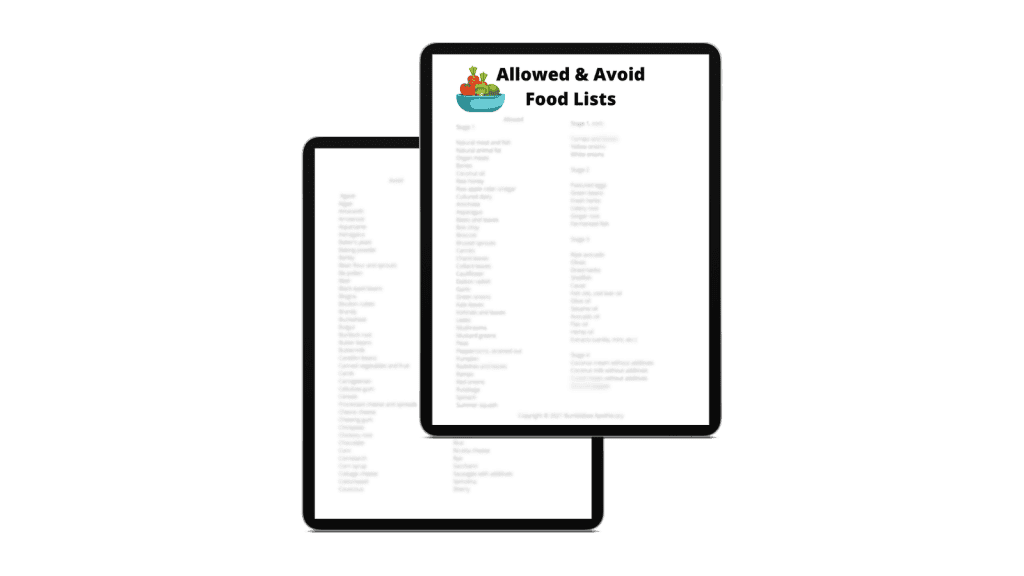
Get the Free Printable GAPS Diet Food List
Want this whole list in a clean, printable format you can stick on your fridge or take to the store? I’ve put together a complete printable GAPS Diet Food List, every allowed and not-allowed food, organized and ready to print. It’s the same food list I use with my coaching clients, and you can grab it free. Just enter your name and email, and I’ll send it right to your inbox.
GAPS Introduction Diet Food List by Stage
If you’re doing the GAPS Introduction Diet, foods are added gradually across 6 stages. Each stage builds on the one before, so you keep eating all the previous foods as you add new ones. Here’s the stage-by-stage food list.
| Stage | Foods to Add |
| Stage 1 | Homemade meat stock, soups made with meat stock and soft-cooked non-fibrous vegetables, boiled meats and fish, animal fats, the liquid from fermented vegetables (start with 1 to 2 teaspoons), ginger/mint/chamomile tea with a little honey. |
| Stage 2 | Add raw organic egg yolks (stirred into soup), stews and casseroles of meat and vegetables, homemade ghee, and increasing amounts of fermented vegetable juice. |
| Stage 3 | Add ripe mashed avocado, scrambled or soft eggs cooked in plenty of animal fat, GAPS pancakes (squash, egg, nut butter), and the fermented vegetables themselves (not just the juice). |
| Stage 4 | Add roasted and grilled meats (no charred bits), cold-pressed olive oil, freshly pressed carrot juice (start slow, build to 1 cup/day), and GAPS-legal baked goods made with nut flour, eggs, and squash. |
| Stage 5 | Add cooked apple as applesauce, soft raw vegetables (peeled cucumber, soft lettuce), and more freshly pressed juices (adding some fruit like apple, pineapple, mango; avoid citrus juice for now). |
| Stage 6 | Add fresh raw fruit (start with peeled apple, then berries and others), more raw vegetables, raw honey, and dried fruit in moderation. Once stable, transition to Full GAPS. |
I have a detailed post for each stage with recipes and guidance, starting with GAPS Intro Stage 1 here. And remember: keep having meat stock with every meal and between meals through every stage, and keep going slowly with the fermented foods.
Tips for Using Your GAPS Food List
- Print it and post it. Keep the list on your fridge so the whole family can see what’s on the menu.
- Shop the perimeter. GAPS foods are whole foods: meats, eggs, vegetables, fats. Most of your shopping happens around the edges of the store, plus a good farm or butcher.
- Source well. Quality matters on GAPS. Look for grass fed meats, pastured eggs, organic produce, and good animal fats.
- Go slowly with new foods. Add one new food at a time and watch how you feel, especially on the Introduction Diet.
- Keep meat stock front and center. It’s the most important food on the entire list.
Frequently Asked Questions
On the GAPS diet you can eat homemade meat stock, fresh meats and fish, eggs, animal fats, non-starchy vegetables, fermented foods, and (on Full GAPS) fruits, nuts, seeds, and raw honey in moderation. The Introduction Diet starts with a smaller set of these foods and adds more in stages.
The GAPS diet avoids all grains, refined sugar and artificial sweeteners, starchy vegetables (like potatoes), most beans and legumes, pasteurized and processed dairy, processed foods, industrial seed oils, and soy. Coffee and alcohol are avoided in early stages.
No, potatoes and other starchy vegetables (sweet potatoes, parsnips, yams) are not allowed on the GAPS diet. The diet removes starches to give the gut a rest and to avoid feeding problematic gut flora.
Yes, on the Full GAPS diet, in moderation, mostly as treats and saved for the right time. On the Introduction Diet, fruit is added gradually, starting with cooked apple in stage 5 and fresh fruit in stage 6. Most of the diet stays savory.
Yes, raw honey is the main sweetener allowed on GAPS, used in moderation. It’s introduced in stage 6 of the Introduction Diet and used on Full GAPS for treats and baking.
Meat stock is made from raw, meaty bones cooked for a shorter time (about 1.5 to 3 hours for chicken) and is gentle and healing, which is why it’s used throughout GAPS Intro. Bone broth simmers much longer (24+ hours) and is higher in compounds that can irritate a healing gut, so it’s saved for later in the Full GAPS diet.
Grab Your Printable GAPS Resources
Want this list and more in a format you can print and follow? Here’s how I can help:
🌿 Free: Printable GAPS Diet Food List — the complete allowed and not-allowed food list, ready to print. The same one I use with my coaching clients.
🌿 Also free: GAPS Intro Stages Chart — a printable chart showing exactly what to add at each stage of the Introduction Diet.
🌿 GAPS to Go — my done-for-you 30-day GAPS Intro meal plan with shopping lists, recipes, a stages chart, and videos on when to move stages.
🌿 Coaching: The Ancestral Gut Reset — step-by-step coaching for the whole journey.
Related Posts You’ll Love
The GAPS Diet Explained: Stages, Foods, and How It Heals
GAPS Intro Diet Stage 1 (with recipes)
Meat Stock Recipe for the GAPS Diet
Sauerkraut Recipe for the GAPS Diet
How to Transition to the Full GAPS Diet
Join our traditional wisdom community, and grab a free Gut Reset Jumpstart when you subscribe!
GAPS™ and Gut and Psychology Syndrome™ are the trademark and copyright of Dr. Natasha Campbell-McBride. The information in this blog post is my personal experience and opinion as a Certified GAPS Coach. It is for general information purposes only, may not apply to you as an individual, and is not a substitute for your own physician’s medical care or advice. Always seek advice from your physician or another qualified health provider with any questions you may have regarding nutrition, medical conditions, and advice. Never disregard medical advice or delay seeking medical care because of something you have read on this blog.
💛 Marisa