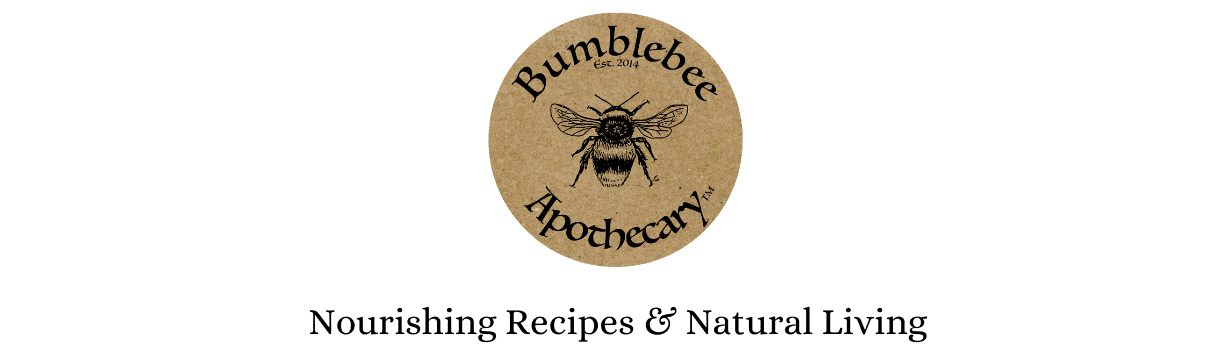
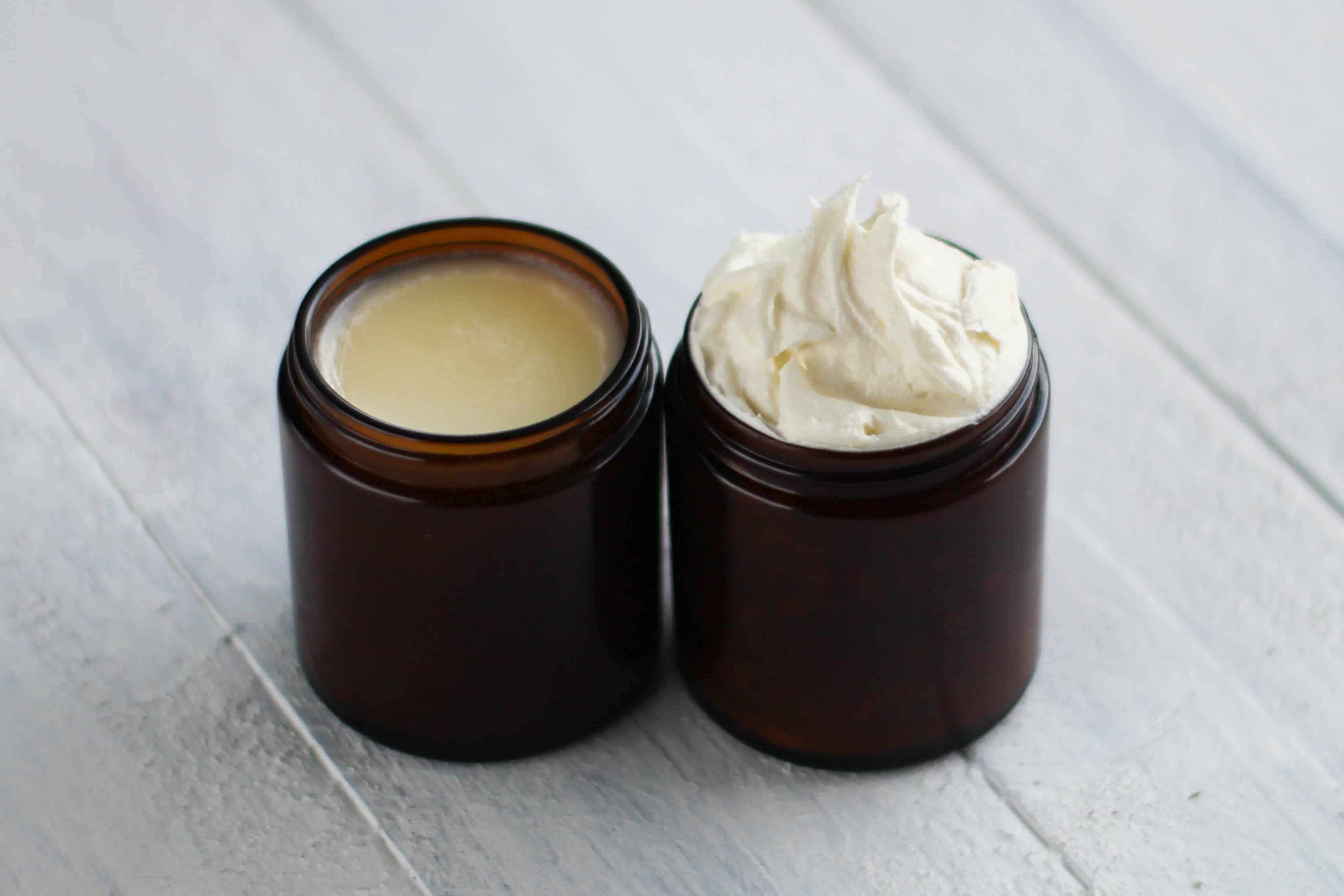
What’s my secret weapon for all things skin-related? Tallow, of course! Because it is so similar to our own skin cells, tallow is the perfect moisturizer and healer for skin. This is an updated tutorial of my favorite tallow balm recipe for dry skin, eczema, acne, anti-aging, and more!
Tallow balm recipe
It might sound totally crazy. Rub beef fat into your skin? But once you try tallow balm, there’s no going back!
As soon as you take a little bit and start to rub it into your skin, you’ll experience it: deep, soothing moisture that our skin seems to instantly recognize and love.
Pin it for later

This post contains affiliate links, which means I make a small commission at no extra cost to you. Get my full disclosure here.
Why does grass-fed tallow work so well?
Tallow is especially compatible with our skin cells. Because of this, it works so much better at moisturizing than any plant-based oil or butter. Tallow made from 100% grass fed, grass-finished beef is especially high in all sorts of skin-friendly nutrients. Here’s a list of what 100% grass-fed tallow does:
- Is deeply nourishing and moisturizing
- Contains Vitamins A, D, K, & E, & B12, all of which are extremely beneficial for skin
- Also helps to prevent the skin’s loss of moisture
- Contains conjugated Linoleic Acid (CLA) with natural anti-inflammatory properties
- All of these nutrients are found together only in animal products
- Contains oleic acid (omega 9) aids other components in penetrating deeply into the skin
- Is antibacterial & antimicrobial
- Contains palmitic acid which helps improve the protective barrier function of the skin
- Is rich in minerals
- Contains stearic acid which helps to repair damaged skin, and improves skin’s flexibility and suppleness
- Aids in skin regeneration for skin that appears healthier and more youthful
- Contains palmitoleic acid (omega 7) which is one of our skin’s basic building blocks
Because of all these nutrients, and the way that tallow is so compatible with our skin, tallow balm is the absolute best skin moisturizer ever.
All of these nutrients and antioxidants make tallow balm the ultimate anti-aging skin cream as well.
If you want to read more, I have another blog post on beef tallow benefits, another one on why skin loves grass-fed tallow, and another one on the complete guide to tallow skin care.
The ultimate skin remedy
Tallow balm works incredibly for routine moisturizing. But it is even more amazing when used to soothe a variety of skin issues. Eczema, acne, rashes, itchy skin, and burns are no match for tallow balm’s wonderful soothing and healing properties.
The natural antibacterial and antimicrobial properties make tallow balm wonderful for soothing and healing acne as well.
Scars and stretch marks are other things that happen from time to time. Tallow balm helps immensely to fade them, and to soothe and repair skin.
Check out my entire homemade anti-aging skincare routine here, and how to make tallow sunscreen here. If you’re looking for something lighter, I also have a tallow lotion recipe here.

Make this tallow balm recipe even better
Tallow balm on its own is phenomenal. A plain, unscented tallow balm is my top choice whenever I want to use it as a baby skin cream, to heal diaper rash, or to use it to avoid soreness when nursing. In all those cases, it’s important to not use any additional ingredients, to avoid irritating or upsetting a baby’s skin or tummy.
Lots of times though, I love to add essential oils to my tallow balm recipe. Essential oils have their own amazing properties for the skin, and they can definitely enhance the healing power of grass-fed tallow.
There are essential oils that help to heal, soothe, and calm skin. Some essential oils are wonderful for anti-aging.
Sometimes, I choose essential oils for my tallow balm based purely on how good they smell. It’s really fun to experiment and come up with new scent combinations!
Whenever I add essential oils to my tallow balm recipe, I like to use a 1% dilution. That would be 48 drops for an 8 fl. oz. jar of tallow balm.
The magic potion
Making a tallow balm recipe is really pretty simple. It is just rendered tallow, a very small bit of olive oil, and some optional essential oils. The olive oil is added to make the balm soft enough to easily spread and work into the skin. I usually use olive oil, but any liquid, skin-friendly oil will work nicely. Another option I really like is jojoba oil.
The tallow you use really does make a difference. You can use tallow from any beef fat, but in order to get the most beneficial nutrients, I recommend using tallow from 100% grass-fed, grass-finished beef. I have lots of tips on where to buy tallow in another blog post, which you can read here.
If you buy already rendered tallow, you’re good to go. All you have to do is melt it and then combine the other ingredients.
You can also render tallow yourself. I have a tutorial on how to render and purify tallow so that it is odorless and white in another blog post, which you can read here.
To whip or not to whip
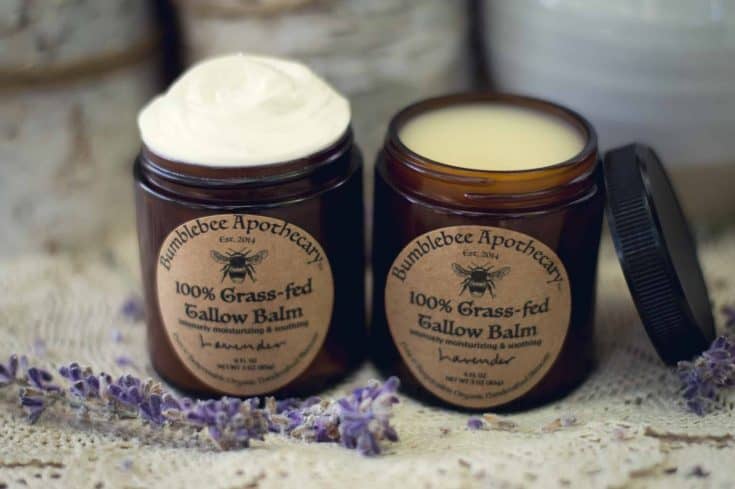
You can make tallow balm in two ways: whipped or solid.
Solid tallow balm is the consistency of butter at room temperature. It’s great when you want to keep some tallow balm around long term.
Whipped tallow balm is my favorite. It is light and fluffy, like whipped cream! It is luxurious to apply.
Alright, now that you’ve fallen in love with tallow balm like I have, let’s get to it and make some!

Tallow balm recipe directions
Ingredients:
- 1 cup melted tallow (preferably from organically raised, 100% grass-fed beef)
- 1/4 cup olive oil (or another skin-friendly, liquid oil)
- 48 drops essential oils (if desired)
Instructions:
- Gently melt tallow so that it is liquid.
- Stir olive oil into melted tallow.
- Add essential oils, if using, and stir again.
- For the solid version, pour liquid tallow balm into a glass jar. Allow it to solidify at room temperature.
- For the whipped version, pour liquid tallow balm into a large mixing bowl. Allow it to solidify at room temperature. Whip tallow balm with a hand mixer for at least two minutes until it is light and fluffy, sapping periodically to scrape down the sides of the bowl.
- Store in a cool, dark place.
Have you tried tallow balm before?
What did you think of it? How has it helped you? Tell me about it in the comments!
Join our traditional wisdom community, and grab a free DIY home remedy recipes eBook when you subscribe!
More organic skincare recipes
Tinted lip balm recipe with honey and tallow
Reasons why skin loves grass-fed tallow
How to render and purify tallow
Shop this post
Organic extra virgin olive oil
Want to pick up a handmade organic tallow balm?
Check out the Bumblebee Apothecary Shop here.
Follow along with Bumblebee Apothecary
Thanks for stopping by! Be well! 
If you make this recipe and love it, please give it 5 stars! Also, tag me on Instagram @bumblebeeapothecary
Tallow Balm
A Nourishing, Traditional Skin Moisturizer Your Whole Family Can Use
Instructions
- Melt tallow over gentle heat until it is liquid.
- Remove tallow from heat. Add olive oil and stir to combine.
- Add essential oils and stir again.
- For solid tallow balm, pour balm into glass jar. Allow to harden in the refrigerator. When solid, let balm come to room temperature before using.
- For whipped tallow balm, pour liquid balm mixture into a large mixing bowl. Allow to solidify at room temperature. When solid, whip with a hand or stand mixer until light and fluffy. Store in glass jar.
- Store both forms of tallow balm at room temperature.
Recommended Products
As an Amazon Associate and member of other affiliate programs, I earn from qualifying purchases.

Thank you for sharing! Have you ever tried vanilla extract instead of essential oils? If so, how much do you use?
Hi! This is a super fun recipe!
So, right now my face is a little swollen and feels like 60 grit sandpaper (fish scales). Dr. thought something I ate, though I’ve a new body oil base containing jojoba oil. (Sis is allergic to it – wonder if I am too.)
Anywho – I made this but used 3/4 Cup tallow and added 1 Tbsp coconut and enough Shea to equal 1 Cup melted. For the liquid oil I used Camellia Seed Oil with a dropper of Neem & Vitamin E. I put 1/2 the Lavender 40/42 & Frankincense in before putting an ounce into a push up tube (trial) and 1 ounce in a metal tin.
Then added the rest of the essential oils and 1 tsp cornstarch before whipping it up.
The scent is mild. The texture is so silky!
In cleaning off the beater, I shared with Grandma and both my arms. LOL A bit much product yet it doesn’t feel all that greasy – soaking in!
It seems this recipe is very forgiving. I used the Shea partly because I wanted to try the push up tube and being pretty new to body butters, I was afraid it might stay to soft for the tube. It has really helped with the prickly heat and itchiness I had before putting some of this on! Thank you so much for sharing these recipes!
Looking forward to trying more!
I just made my very first batch. I used Leaf Lard from Fatworks. I also have their tallow, I may try your suggestion on how to remove the beefy scent from it on my next batch.
My tallow looked great when I whipped it, but after I put it in jars it started to harden up and is kind of crumbly. What did I do wrong and is there any way I can fix it?
Hello, have you made lip balm from this recipe? I’ve had the thought of just putting some of the mixture in my lip balm tubes, but wonder if the consistency would work and if it would harden enough for that type of application.
What is the shelf life for Tallow Balm?
Can I use vanilla extract in place of the essential oils?
Hello, I’ve made my first batch of rendered tallow and I’m over the moon! I’m currently on the hunt for amber glass jars like you have, and I’ve quickly realized how hard they are to find! No where local has them and I’m having trouble finding 16oz online. Could you please share where you get your amber jars? Thank you!!
I like to get them from specialtybottle.com 🙂
My husband bought a box of 30 amber 8oz jars off of amazon
I have been fortunate to get a good source for Wagyu Beef Fat to render and make tallow from. I understand the health benefits are even greater than grass fed tallow. What is your opinion about this for a face balm?
What’s your thoughts on using citrus oils in the whipped tallow balm? Do you think it will be diluted enough that photosensitivity wouldn’t be an issue?
Thank you so much for this recipe. I have 2 questions. How long does this last? And, does this help hormonal acne and the scars from it?
You’re welcome, thank you! In my experience it lasts around 6 months to a year at room temperature. Yes, it is very helpful for both acne, and healing acne scars. For me personally, healing acne from the inside out with the GAPS diet eliminated it for good, but tallow balm was very helpful during the healing process. Hope that helps!
I made the pure tallow soap and I really like it. I want to make the balm now and wondered if it absorbs well or stays greasy on your face.
I’m glad! Tallow balm is wonderful for the face. You have to use a very little bit, and it won’t be greasy. If you use too much, just wipe the excess off on a dry towel 🙂
Can I add magnesium oil to this recipe?
You can try, but it might be hard to get it to blend in. I would try making magnesium lotion, and adding tallow in place of the shea butter: https://bumblebeeapothecary.com/best-organic-magnesium-lotion-recipe/
I just rendered some pork tallow. Can that be used for tallow balm in place of beef tallow?
Great question! You can, but beef tallow has a lot more skin friendly nutrients. Lard from pasture raised pork has a lot of vitamin D, but that’s about it. Hope that helps!
Thank you so much for the recipe.. I love that it is so easy to follow.. I have only one problem, I can smell the tallow on my finished balm. Is this normal? Can i add more Essential oil?
Hi, thank you for the recipe. My daughter has eczema and i made this tallow balm today. I bought grass fed tallow. My finish jar is still has smell of tallow. Im wondering if i can put mOre essential oil than 46 drops?
Yes you can! This recipe is for a 1% dilution, but you can go stronger if you like, as long as your daughter is older than 2 years old.
Where can I buy your tallow balm for my face?
I tried to on Etsy but my account had been closed years ago and I can’t find your tallow on Amazon.
Thank you.
Thanks for your interest! I don’t have it on Amazon at this point, but you should be able to purchase on Etsy without an account. I believe you can checkout as a guest. Feel free to reach out if you need any help placing the order!
Thank you so much for sharing your wonderful recipes! I’ve been making your whipped tallow balm and love it. I recently made a jar for my husband to use and the only thing he didn’t like was that it felt oily/greasy when he put it on. I usually put mine on after showering and let it absorb before getting dressed, so it’s not an issue. For him though, I was wondering if adding less olive oil would help with the initial greasy feel – I don’t want to change the effectiveness of the balm though. Any thoughts? TIA.
You’re welcome! I find that if it seems oily or greasy, to try using less. In my experience that happens when you use too much. I hope that helps!
This tallow balm feels so amazing on my skin! I love it and I love how simple it is to make.
Thank you so much, I’m so glad you’re enjoying it!
I bought your tallow balm recently and my family loves it, even my kids! I bought some tallow and finally got it in the mail today so I tried out your recipe and whipped up part of the batch. All I can say is WOW!!! I really love it! Thanks so much for your information and your willingness to share!
Thank you so much! That is so sweet of you! I’m so glad you’re enjoying it 🙂
I would like to know where to buy beef tallow.
Thanks
Larry
I actually have a post all about this: https://bumblebeeapothecary.com/where-to-buy-tallow/ 🙂
Hi this might help with grainy texture. Sometimes the fat molecules separate and become pebbly or grainy in the cooling process if done too slowly. Try putting it in the freezer for approximately 30-45 mins to allow the fat to cool quickly – once it comes back to room temp it should be smooth as butter! Hope that helps!!!
That’s very interesting – thanks for sharing! Although, I have had it cool quickly (put it outdoors at around 16 degrees Fahrenheit) and it cooled quickly, but it was still grainy at room temp. It was in a large bowl, though. Does it help to have it in smaller containers to cool even faster? I’m intrigued by this! 🙂
How do you fix grainy balm. It’s so bad we hate using it. It’s my 3rd batch and have not had this issue yet
thanks for the recipe. i tried out the recipe but mine is grainy. what can i do to get it smooth
You’re welcome! Sometimes tallow turns out grainy, and there isn’t anything I’ve discovered to make it smoother. Since it’s such a natural product, it tends to vary in consistency based on where it was in the animal, the seasons, and the conditions the cattle were raised in. It still works great for skin, though! 😊
Heloo.. new at tallow soaping and its amazing!
Would likento ask you if you know if the tallow balm is cloth diaper friendly?
Isn’t it great? 😀 Yes! I have used cloth diapers for all three of my kids, and tallow balm works wonderfully. It doesn’t coat them or cause any problems like some diaper creams do. And it is amazing for healing rashes! 🙂
This looks so awesome! Once I get my kitchen back I really need to make some tallow and try all your tallow recipes! Can’t wait!!!
Thanks! Have fun!
I need to try this! You always give me so much food for thought. I think I’ll try the whipped tallow balm when I manage to get my hands on some tallow!
Thank you! I hope you like it!
Hi Marissa! I love Tallow Balm! I go through LOTS of it as I am recovering from something called Red Skin Syndrome or TSW -Topical Steroid Withdrawal which developed as a result of using topical steroids for eczema. I buy my tallow already rendered from Millers Organic Farm in Pennsylvania. It’s top quality. My question is that sometimes my Balm turns out a bit gritty. Have you ever experienced that? And if so, do you have any suggestions? Thanks for all you do! God Bless!
Hello! How nice to meet another tallow balm fan 😊 I’m so glad it’s so helpful for you! Yes, I have had the texture become gritty from time to time. I did some research, and it doesn’t have anything to do with the balm making process, or even the rendering. Rather, it’s a seasonal thing that has to do with the amount of grass, sunlight, and water the cattle are receiving. I find that balm with the gritty texture still works just as well, and absorbs in with some rubbing. Hope that helps! 😊