
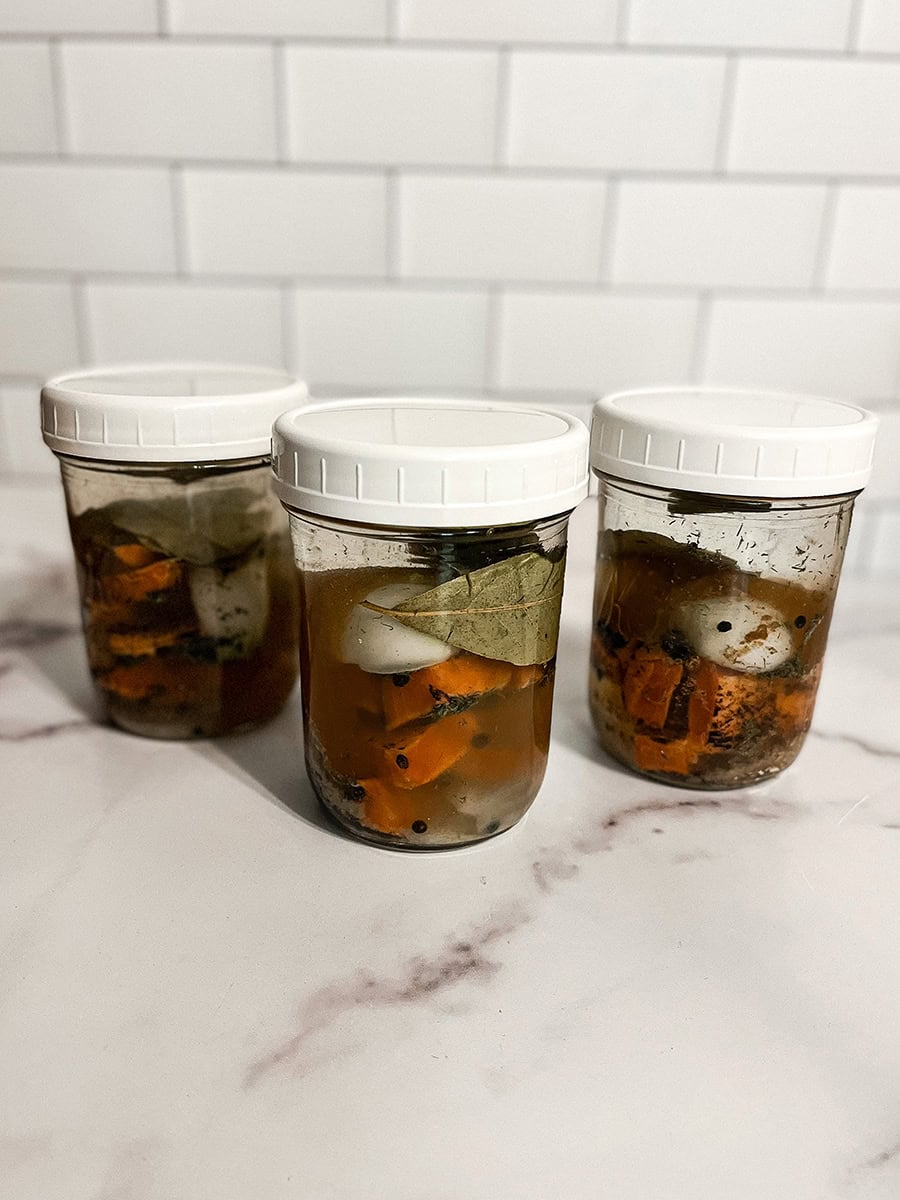
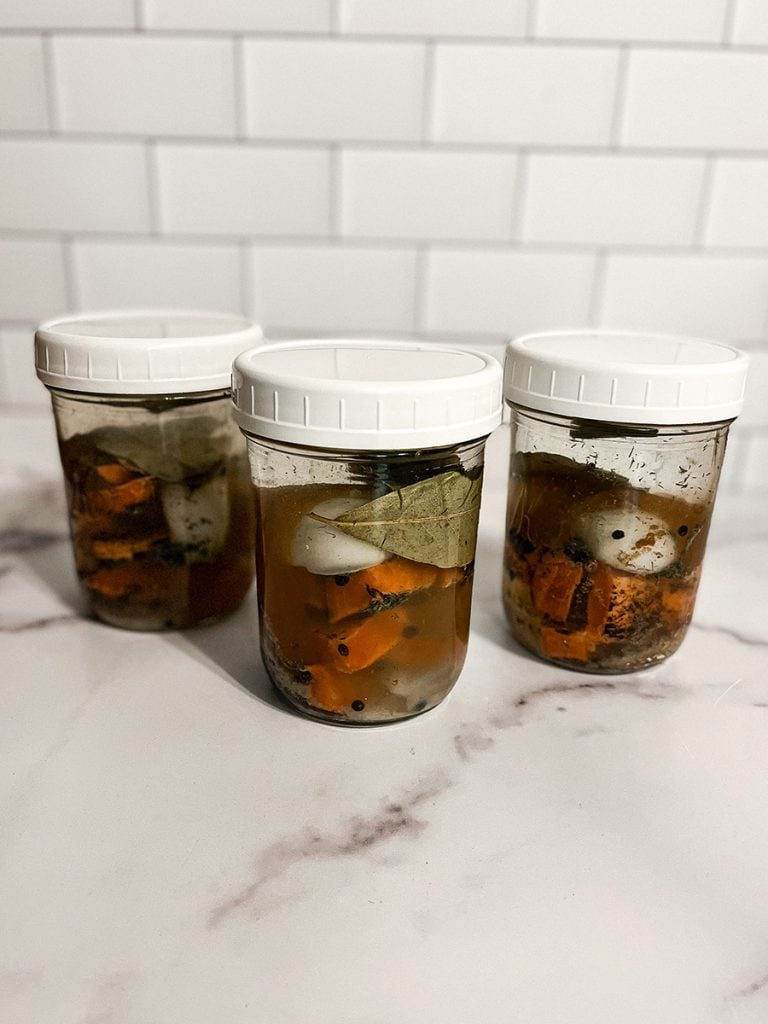
Fermented Fish Recipe for the GAPS Diet
Fermented fish is a nutrient-dense, probiotic-rich traditional food that Dr. Natasha includes from Stage 2 of the GAPS Introduction Diet. It’s deeply nourishing, but it’s also incredibly practical. This fermented fish recipe is perfect for traveling or taking on the go because it doesn’t need to be refrigerated. I’m sharing one of my favorite ways to make fermented fish in jars, so it’s easy to portion out, store, and bring along when you need a simple lunch or snack.
If you’re looking for more fermented GAPS diet recipes, try my easy fermented carrots recipe or learn how to make fermented nut butter that’s easy to digest.
Pin it for later
This post contains affiliate links, which means I make a small commission at no extra cost to you. Get my full disclosure here.
Ingredients you need for GAPS fermented fish
The fish you need for this recipe is very fresh, high-quality, wild-caught, and sushi grade. If you’re like me and don’t live near the coast, you may need to order fish or try to visit a local market. You’ll want a boneless, skinless fillet. It should be wild-caught and as fresh as possible. For this fermented fish recipe, I like to use three salmon fillets, roughly 6 ounces each, and divide them among 6 pint-size glass mason jars so I can take them on the go. They’re perfect for a quick GAPS lunch or snack.
The other ingredients you’ll need are just a few small onions, whole peppercorns, coriander, mineral salt, raw local honey, bay leaves, and dill. You’ll also need whey from raw milk kefir or raw milk yogurt to help start the fermentation. Check out my post on how to make milk kefir at home and my 24-hour raw milk yogurt recipe.
How to drip whey from raw milk kefir
- Take your raw milk kefir or raw milk yogurt.
- Line a colander with a cheesecloth or clean linen cloth.
- Place the colander over a bowl.
- Pour the kefir or yogurt into the lined colander.
- Let it sit and strain. The liquid that drips into the bowl is the whey.
The benefits of fermented salmon
This fermented fish recipe is deeply nourishing and intentionally included in Stage 2 of the GAPS Introduction Diet. Dr. Natasha says fermented fish is highly beneficial for brain health because it’s a nutrient-dense, probiotic-rich food that provides important nutrients for the brain.
The wild-caught salmon offers high-quality protein and omega-3 fatty acids to support muscle, brain, and heart health (source). Fermentation also makes the nutrients easier to absorb, which is especially helpful when digestion is still sensitive.
How to make GAPS fermented fish
Ingredients:
- 18 ounces wild-caught, boneless, skinless salmon
- 6 small onions
- 6 teaspoons whole peppercorns
- 3 teaspoons coriander
- 12 tablespoons high-quality mineral salt
- Up to 1½ cups raw local honey
- Up to 30 bay leaves
- 3 teaspoons dill or dill seed
- 12 tablespoons whey
- Filtered water
Instructions:
- Place the salmon into the mason jars, dividing it evenly between all 6 jars.
- Slice each onion in half and place one into each jar.
- Add peppercorns, coriander, and mineral salt to each jar.
- Add raw local honey to each jar (you can adjust the amount based on preference).
- Place up to 5 bay leaves in each jar, then add dill or dill seed.
- Add the whey from raw milk kefir or yogurt to each jar.
- Pour filtered water into each jar until it’s full, leaving a little space at the top. Put the lids on and tighten them well.
- Leave the jars out on the counter at room temperature for 3 to 5 days. After 3 to 5 days, transfer the jars to the fridge.
How to travel with GAPS fermented fish
This fermented fish recipe is based on a recipe in GAPS, Stage by Stage, with Recipes by Becky Plotner. She talks about using it as a travel food, which I think is a great idea because traveling on the GAPS Diet can be challenging. You can make these at the beginning of your trip and then bring them along, and they ferment while you’re traveling without refrigeration.
How long does fermented fish last in the fridge?
When stored in the refrigerator with a tight lid and clean utensils, fermented fish can last many weeks. If it smells rotten or unpleasant in any way, discard it.
Can I make fermented fish without whey?
Whey helps start the fermentation process in this GAPS fermented fish recipe. While some traditional ferments rely on salt alone, this version includes whey intentionally. For best results, I recommend using whey from homemade raw milk kefir or yogurt.
Tips for making the best fermented fish recipe
- I recommend only using sushi-grade fish.
- High-quality mineral salt is important for safety and proper fermentation.
- The fish and onions should always stay under the liquid.
More GAPS diet recipes to check out next
Have you ever tried making fermented fish?
Have you ever tried making fermented fish? It may feel unfamiliar at first, but once you make it, you might be surprised at how simple and nourishing this traditional food is. If you give this fermented fish recipe a try, I’d love to hear how it turned out for you.
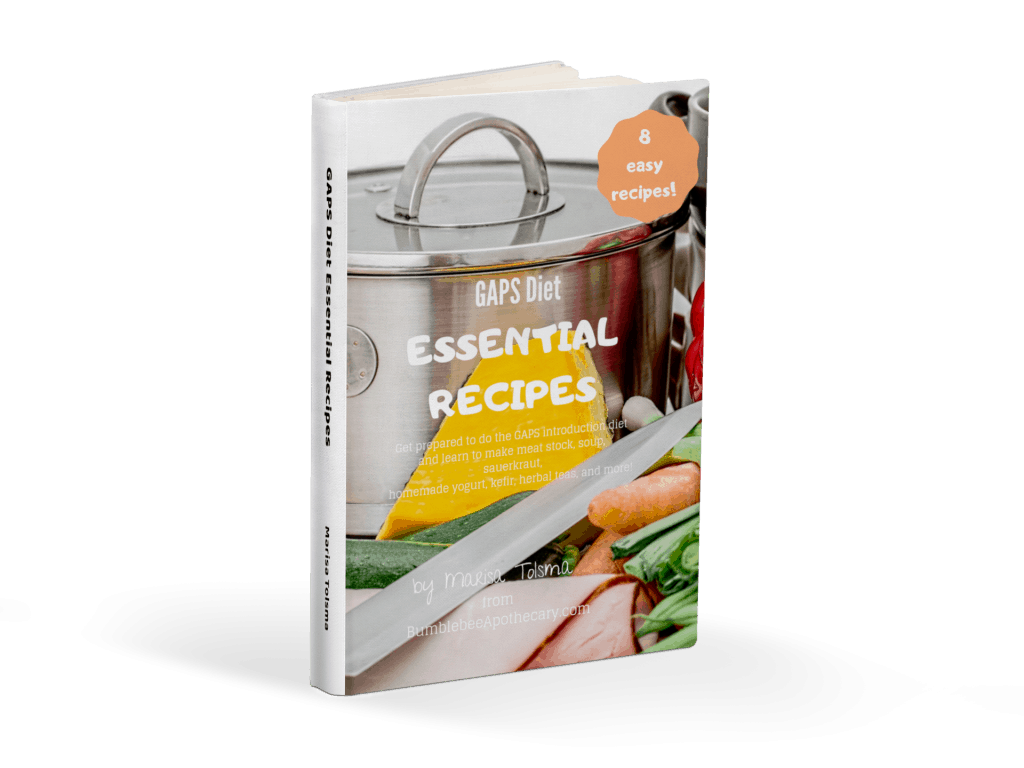
Join our traditional wisdom community, and grab a free GAPS Diet Essential Recipes eBook when you subscribe!
Shop this post
Want to shop for more grocery and natural living essentials?
Check out the Bumblebee Apothecary Shop here.
Looking for a GAPS Intro meal plan?
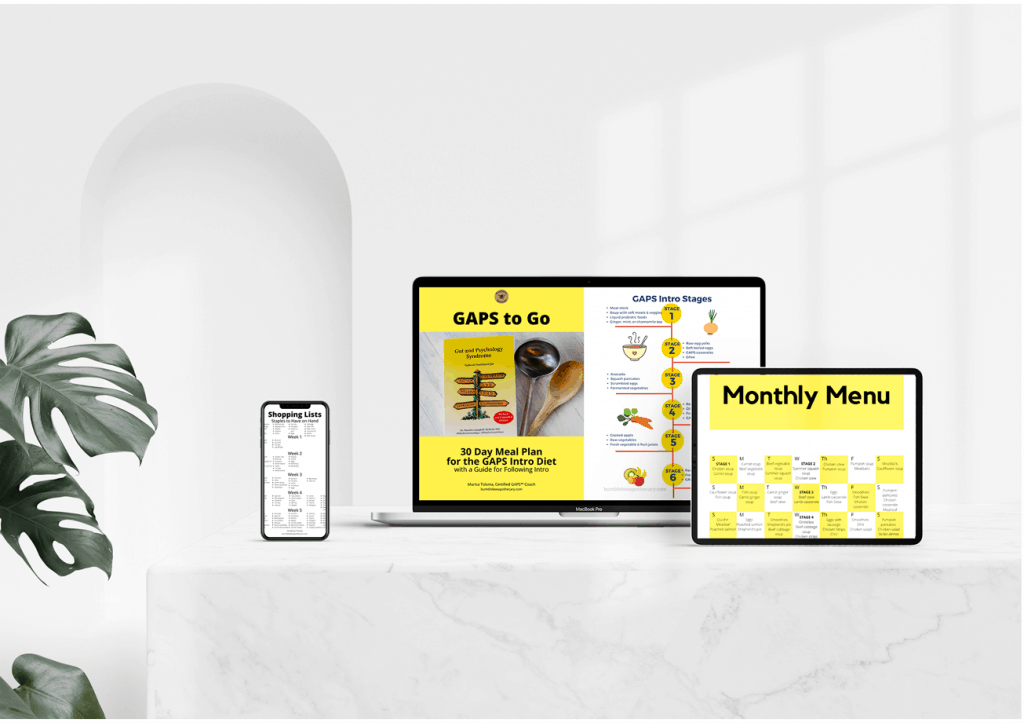
GAPS to Go is a 30 day meal plan for the GAPS introduction diet that tells you what to eat each day, with complete cooking instructions, and guidance on when to move to each intro diet stage. Check out GAPS to Go here.
Follow along with Bumblebee Apothecary
Thanks for stopping by! Be well! 
If you make this recipe and love it, please give it 5 stars! Also, tag me on Instagram @bumblebeeapothecary
Fermented Fish Recipe for the GAPS Diet

Learn how to make a traditional fermented fish recipe for Stage 2 of the GAPS diet. Nutrient-dense, probiotic-rich, and perfect for travel.
Ingredients
- 18 ounces wild-caught boneless, skinless salmon
- 6 small onions
- 6 teaspoons whole peppercorns
- 3 teaspoons coriander
- 12 tablespoons high-quality mineral salt
- 1½ cups raw local honey
- 30 bay leaves
- 3 teaspoons dill or dill seed
- 12 tablespoons whey
- Filtered water
Instructions
- Place the salmon into the mason jars, dividing it evenly between all 6 jars.
- Slice each onion in half and place one in each jar.
- Add peppercorns, coriander, and mineral salt to each jar.
- Add raw local honey to each jar (you can adjust the amount based on preference).
- Place up to 5 bay leaves in each jar, then add dill or dill seed.
- Add the whey from raw milk kefir or yogurt to each jar.
- Pour filtered water into each jar until it’s full, leaving a little space at the top. Put the lids on and tighten them well.
- Leave the jars out on the counter at room temperature for 3 to 5 days. After 3 to 5 days, transfer the jars to the fridge.
Recommended Products
As an Amazon Associate and member of other affiliate programs, I earn from qualifying purchases.

Nutrition Information:
Yield:
8Serving Size:
1Amount Per Serving: Calories: 226Total Fat: 1gSaturated Fat: 0gUnsaturated Fat: 1gCholesterol: 8mgSodium: 940mgCarbohydrates: 16gFiber: 3gSugar: 7gProtein: 39g
The information in this blog post is my personal experience and opinion. It is for general information purposes only, may not apply to you as an individual, and is not a substitute for your own physician’s medical care or advice. Always seek advice from your physician or another qualified health provider with any questions you may have regarding nutrition, medical conditions, and advice. Never disregard medical advice or delay seeking medical care because of something you have read on this blog.