
By Marisa Tolsma, Certified GAPS Coach | Bumblebee Apothecary
Quick Answer
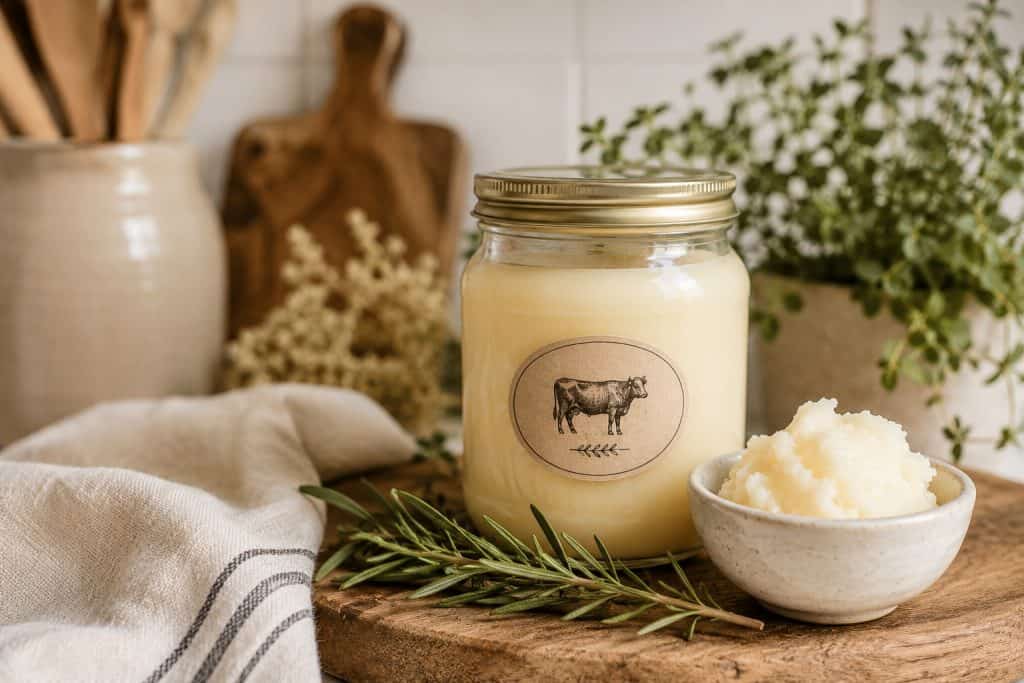
Tallow, rendered fat from grass fed beef, is one of the most powerful traditional foods for supporting gut wellness. Rich in fat-soluble vitamins, anti-inflammatory fatty acids, and nutrients that support the liver, hormones, and gut lining, tallow can play a foundational role in any ancestral gut healing protocol. In my experience as a Certified GAPS Coach, the families who consistently include healthy animal fats in their diet tend to see the most meaningful healing progress.
Pin it for later
This post contains affiliate links, which means I make a small commission at no extra cost to you. Get my full disclosure here.
Maybe you found me because you’ve been making tallow balm.
You’ve been smoothing it onto dry patches, using it for eczema flares, dabbing it on your toddler’s diaper rash. And it helps, it really does. That’s because tallow is genuinely incredible for skin.
But here’s something I’ve been wanting to share with you for a long time.
Those skin issues? The eczema, the rashes, the stubborn dryness? They’re often your body’s way of telling you something is happening inside, specifically in your gut.
And tallow? It’s not just for your skin. Eaten as food, it can be one of the most nourishing and healing things you add to your family’s diet.
Let me explain.
The Skin-Gut Connection: What Your Skin Is Actually Telling You
As Dr. Natasha Campbell-McBride, creator of the GAPS diet, explains, the digestive system is really the basis for the health, or illness, of the rest of the body. The condition of our gut determines so much, including the health of our skin.
I experienced this firsthand. Before I found the GAPS diet, I struggled for years with cystic acne that nothing would touch. Creams, elimination diets, going vegetarian: I tried it all. Nothing made a real difference.
When I finally understood that my skin was a reflection of what was happening in my gut, everything changed.
I went on the GAPS diet in 2011 and followed it for two full years. One of the most central pieces of GAPS is eating lots of healthy animal fats, including tallow. My skin cleared completely. The cystic acne I’d battled for years disappeared.
As I wrote about in my GAPS before and after story: the skin is a reflection of the condition of the gut. It makes perfect sense that healing the gut would clear the skin.
I’ve seen this same pattern play out again and again with my own children and with the clients I coach as a Certified GAPS Coach. When we address what’s happening in the gut, using real, nutrient-dense, ancestral foods, the skin follows.
What Makes Tallow Different for Gut Health?
Not all fats are created equal when it comes to supporting the gut and the body systems connected to it.
Tallow is rendered beef fat, ideally from 100% grass fed, grass finished cattle. The fat from around the kidneys, called leaf fat, is the highest quality and most nutrient dense.
What makes tallow so remarkable is the combination of nutrients it contains, all working together in a way that our bodies recognize and know how to use.
Grass fed beef tallow contains:
- Fat-soluble vitamins A, D, E, K, and B12: this particular combination is found together only in animal products. These vitamins are critical for gut lining repair, immune function, hormone production, and so much more.
- Conjugated Linoleic Acid (CLA): a fatty acid with powerful anti-inflammatory properties, which can be helpful when the gut is inflamed and overwhelmed.
- Stearic acid and oleic acid: both found naturally in the outer layer of our skin and in our sebum. Stearic acid can help with repair and flexibility; oleic acid helps nutrients penetrate deeply.
- Palmitoleic acid (omega 7): a basic building block of our skin cells, and naturally antimicrobial.
- Rich mineral content: trace minerals that support multiple body systems.
Plant-based oils simply cannot offer this combination. That’s one reason Dr. Natasha is so emphatic about animal fats, and why the GAPS diet places them front and center in the healing protocol.
5 Ways Traditional Animal Fats Support Gut Wellness
1. They Support the Gut Lining
The gut lining is made up of cells called enterocytes. When the gut is damaged or leaky, these cells aren’t doing their job well: they’re not absorbing nutrients properly and they’re allowing things through that shouldn’t get through.
Fat-soluble vitamins, the kind found abundantly in grass fed tallow, are essential for cell repair and regeneration throughout the body, including in the gut lining. You simply cannot get adequate fat-soluble vitamins from a low-fat diet.
2. They Are Critical for Liver and Gallbladder Health
The liver plays a central role in gut health and detoxification. It produces bile, which is what breaks down fats for digestion and absorption. It also processes and neutralizes toxins before they can do more damage.
In my experience as a GAPS coach, pretty much anyone who needs gut healing has a liver that is overwhelmed and needs support. Healthy animal fats, including tallow, can help the liver do its job better. Dr. Natasha also emphasizes that eating fat is what signals the liver to produce bile, which in turn improves fat digestion and the absorption of fat-soluble nutrients. It’s a beautiful, supportive cycle.
Eating more animal fat can feel counterintuitive if you’ve been taught that fat is the problem. But in my experience, and in Dr. Natasha’s clinical observation, the opposite tends to be true.
3. They Are Foundational for Hormones
Your hormones are made from cholesterol and fat. Without enough of the right dietary fats, hormone production can suffer, and hormonal imbalances can show up as skin issues, fatigue, mood swings, fertility challenges, and more.
This is one of the reasons Dr. Natasha says that animal fat is important for hormone balance. Traditional cultures that ate plenty of animal fats consistently showed excellent hormonal health and fertility across generations, as documented by Dr. Weston A. Price in his research on traditional diets.
4. They Support Brain Function and Mental Clarity
The gut-brain connection is central to Dr. Natasha’s work: GAPS stands for Gut and Psychology Syndrome. A significant portion of our neurotransmitters are produced in the gut, and the brain is largely made of fat.
In my own experience, the brain fog and fatigue I used to deal with lifted as I healed my gut and consistently ate more nourishing animal fats. I’ve heard similar stories from so many clients and community members.
5. They Accelerate Healing Progress on the GAPS Diet
This is something Dr. Natasha says clearly, and I have seen it play out consistently in my coaching practice: the more animal fats a person consumes, the quicker their healing progress tends to be.
She recommends working up to at least half a cup of additional animal fat each day, and her latest recommendation is up to one cup of additional animal fat daily. That might sound like a lot! But it’s cumulative across the whole day: a spoonful added to meat stock here, butter melted over vegetables there, tallow used for cooking, a cube of cold butter alongside a piece of meat.
In my own family, I keep jars of different animal fats on the counter, butter, lard, and tallow, so they’re easy to reach for all day long.
Tallow on the GAPS Diet: The Explicit Connection
The GAPS diet was developed by Dr. Natasha Campbell-McBride, a neurologist and nutritionist, based on the work of Dr. Sydney Valentine Haas and the Specific Carbohydrate Diet. GAPS focuses on healing the gut through very nourishing, easy-to-digest foods: meat stock, meats, eggs, cooked vegetables, fermented foods, and lots of healthy animal fats.
The best animal fats on the GAPS diet include:
- Tallow (beef, bison, lamb, deer)
- Lard (from free range pigs)
- Butter and ghee
- Duck fat and goose fat
- Chicken fat
- Cod liver oil
Tallow is my personal favorite. It is deeply nourishing, stable for cooking at high heat, incredibly versatile, and sourced from the same grass fed beef that forms so much of the GAPS diet.
One of the things I love to do is render my own tallow at home using the wet rendering method, which produces a lovely, mild, white tallow that’s wonderful for both cooking and skincare. If you’re new to that process, I walk through it in detail in my how to render tallow post here.
On GAPS intro specifically, Dr. Natasha is very clear: keep the fat content of meals high. She says those animal fats are what promote healing. Add a spoonful of tallow or butter to every bowl of soup. Cook your meats in fat. Don’t be shy about it, even if it feels like a lot at first.
If you’re new to eating more fat, go slowly and let your body adjust. Nausea can be a sign that the liver needs a little time to ramp up bile production. This is completely normal and worth working through. I have a whole post on supporting fat digestion on the GAPS diet here if you want to read more about that.
If You’ve Been Using Tallow on Your Skin, Read This
If you found your way here through my tallow balm recipe or any of my DIY skincare posts: welcome. I’m really glad you’re here.
I want to gently offer you something to think about.
The reason I started making tallow balm in the first place is because I was learning about the GAPS diet and the power of ancestral foods. Tallow became a part of our daily life: in our kitchen, in our skincare, in so many ways.
And what I’ve seen, both in my own family and with clients, is that when we address gut health from the inside with these same nourishing fats, along with meat stock, fermented foods, and all the other pieces, the skin often clears up in ways that topical products alone simply cannot achieve.
Tallow balm can be a beautiful, gentle support for your skin. But if your skin is struggling, especially with chronic issues like eczema, persistent dryness, rashes, or acne, it’s worth asking what your gut might be trying to tell you.
That’s exactly the kind of thing I help families work through in The Ancestral Gut Reset. If you’re curious about what a supported, step-by-step approach to gut healing could look like for your family, I’d love for you to learn more.
Wondering more specifically if tallow is good for acne? I wrote a deeper post on that here.
How to Start Adding Tallow to Your Diet
The good news: this doesn’t have to be complicated. Here are some simple, doable ways to start incorporating more nourishing animal fats into your day.
Use tallow for cooking. It has a high smoke point (400–420°F) and adds a wonderful, savory flavor. Use it to sauté vegetables, fry eggs, cook meats, or make the most delicious homemade French fries you’ve ever eaten.
Add a spoonful to soups and stocks. This is one of the easiest habits to build. Every bowl of meat stock or soup gets a spoonful of fat stirred in. This also makes the fat-soluble vitamins in your vegetables more bioavailable.
Keep butter on the counter. A soft, room-temperature pat of butter alongside a piece of steak is a beautiful, traditional way to eat.
Use it for baking. Tallow makes an exceptionally flaky pie crust. It also works beautifully in biscuits and other savory baked goods.
Season your cast iron with it. This is a lovely way to build the habit into your kitchen rhythm, conditioning your cookware while also having tallow on hand for cooking.
If you want to render your own tallow at home, I walk through the whole process in my tallow rendering tutorial here. It’s truly doable, even with a busy family.
Frequently Asked Questions
In my experience as a Certified GAPS Coach, grass fed beef tallow can be a valuable part of a gut healing diet. It provides fat-soluble vitamins, anti-inflammatory fatty acids, and supports liver and bile function, all of which play an important role in gut wellness. Dr. Natasha Campbell-McBride recommends generous amounts of animal fat on the GAPS diet, observing that higher fat intake tends to correlate with quicker healing progress. This is meant for general informational purposes; always work with your own healthcare provider for your specific situation.
In my observation, skin issues like eczema often have a gut-health component. Dr. Natasha says the digestive system is the basis for the health of the rest of the body, and the skin frequently reflects what is happening internally. While tallow topically can soothe and support the skin, many people find that addressing gut health through an ancestral, nutrient-dense diet, including healthy animal fats, can produce meaningful improvements in chronic skin issues over time. This is not medical advice; please work with a qualified healthcare provider.
In my observation, skin issues like eczema often have a gut-health component. Dr. Natasha says the digestive system is the basis for the health of the rest of the body, and the skin frequently reflects what is happening internally. While tallow topically can soothe and support the skin, many people find that addressing gut health through an ancestral, nutrient-dense diet, including healthy animal fats, can produce meaningful improvements in chronic skin issues over time. This is not medical advice; please work with a qualified healthcare provider.
Dr. Natasha Campbell-McBride recommends gradually working up to at least half a cup of additional animal fat per day, with her latest recommendation being up to one cup of additional fat daily. She advises going slowly if your body needs time to adjust, especially if you have historically eaten a low-fat diet. Starting with smaller amounts and gradually increasing is a gentle, supportive approach.
On the GAPS diet, Dr. Natasha recommends a variety of animal fats, including tallow (beef, lamb, deer), lard from free range pigs, butter, ghee, duck fat, goose fat, chicken fat, and cod liver oil. Tallow from 100% grass fed beef is particularly nutrient dense, containing fat-soluble vitamins A, D, E, K, and B12, as well as CLA and other beneficial fatty acids. Using a variety of healthy animal fats throughout the day is a wonderful approach.
Tallow is rendered beef fat, meaning raw beef fat that has been cooked down and melted into a stable, shelf-friendly cooking and skincare fat. The highest quality tallow comes from the fat surrounding the kidneys, called leaf fat. Tallow can be rendered at home or purchased already rendered. When sourced from grass fed beef, it has the highest concentration of beneficial nutrients.
Dr. Natasha says that the liver can adjust over time to compensate for the absence of a gallbladder, creating a system for storing bile similarly to how the gallbladder functioned. As always, she recommends going slowly and listening to your body, and I would always encourage anyone with a specific health situation to work with their own healthcare provider.
Want to Go Deeper?
If this post is resonating with you, if you’re already making tallow balm and now you’re wondering what gut healing could do for your family, I’d love to invite you to take the next step.
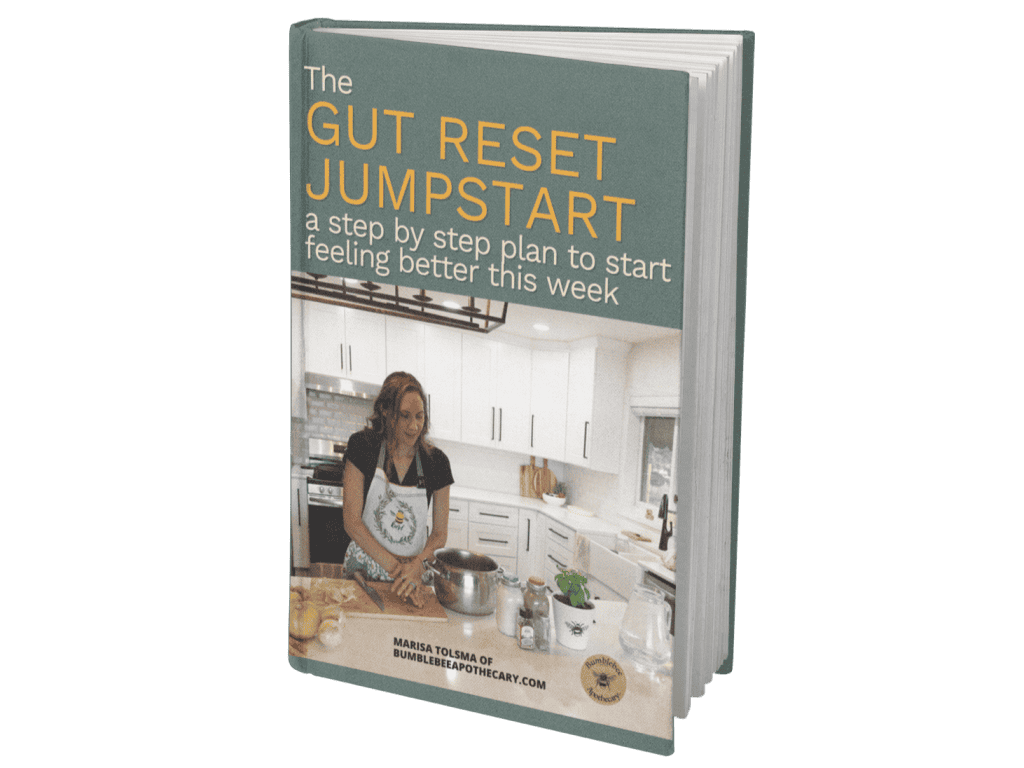
Grab a free copy of the Gut Reset Jumpstart: bumblebeeapothecary.com/free-beginner-gut-wellness-starter-guide. Simple, doable steps to start supporting your gut this week, without overwhelm.
Ready for step-by-step coaching? The Ancestral Gut Reset is a structured, supported coaching program with bi-weekly live calls where I help families navigate gut healing using real, ancestral food. No expensive supplements. No fads. Just real food and real support.
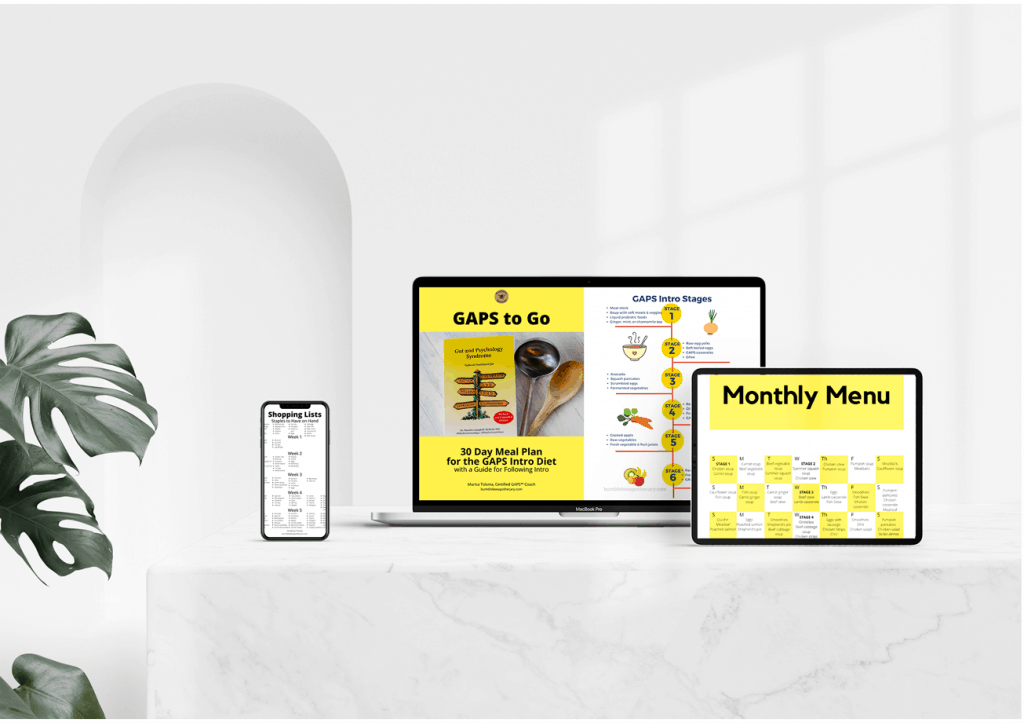
Already ready to start GAPS? GAPS to Go is my 30-day meal plan for the GAPS Introduction Diet, 14 years in the making, with complete cooking instructions, shopping lists, and stage-by-stage guidance. Takes all the guesswork out of what to eat each day.
Related Posts to Read Next
- How to Render Tallow: Easy Crockpot Method
- How Render and Purify Tallow so that it is Odorless and White
- How to Make Tallow Balm: The Ultimate Moisturizer
- Fat Digestion on the GAPS Diet
- GAPS Diet Introduction Phase Stage 1
- How to Start the GAPS Diet
- GAPS Diet Before and After: How the GAPS Diet Changed Our Lives
Join our traditional wisdom community, and grab a free Gut Reset Jumpstart when you subscribe!
Want to work with Marisa, Certified GAPS Coach?
I offer a complete step-by-step coaching experience through The Ancestral Gut Reset. You can learn more here.
GAPS™ and Gut and Psychology Syndrome™ are the trademark and copyright of Dr. Natasha Campbell-McBride. The information in this blog post is my personal experience and opinion as a Certified GAPS Coach. It is for general information purposes only, may not apply to you as an individual, and is not a substitute for your own physician’s medical care or advice. Always seek advice from your physician or another qualified health provider with any questions you may have regarding nutrition, medical conditions, and advice. Never disregard medical advice or delay seeking medical care because of something you have read on this blog.
💛 Marisa
Let's turn food into wellness