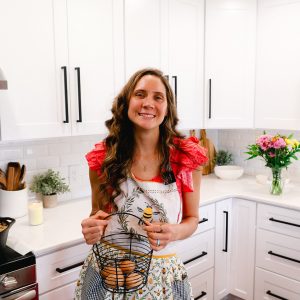
By Marisa Tolsma, Certified GAPS Coach | Bumblebee Apothecary
Quick answer
The GAPS diet is a gut healing nutritional protocol developed by Dr. Natasha Campbell-McBride that uses traditional, nourishing foods to heal leaky gut, restore beneficial gut bacteria, and address conditions rooted in gut health. The protocol has three phases: the GAPS Introduction Diet (6 progressive stages of deep healing foods), the Full GAPS Diet (a long-term maintenance phase, typically 18 to 24 months), and the Transition Phase (gradual return to a broader ancestral diet). In my experience as a Certified GAPS Coach, the protocol works because it removes the foods that damage the gut and replaces them with the exact foods the body needs to rebuild itself.
Pin it for later
This post contains affiliate links, which means I make a small commission at no extra cost to you. Get my full disclosure here.
The GAPS diet explained
Most people hear about the GAPS diet and think it sounds either miraculous or impossible. Both are kind of true. It is a substantial undertaking. And it is also one of the most genuinely healing things I have ever done for my body, my family, and my coaching clients.
I started GAPS in 2011 after years of struggling with cystic acne, chronic fatigue, frequent headaches, and being underweight. I had tried elimination diets and went vegetarian for a while (which was a disaster). Nothing really worked until I committed to GAPS. I did the protocol for 2 full years. My skin cleared. My energy came back. My headaches stopped. My weight stabilized.
I have been practicing ancestral nutrition since 2011 and coaching other families through GAPS as a Certified GAPS Coach. So when I explain how GAPS works, I am speaking from inside the protocol, not from above it.
Here is the GAPS diet, explained in plain language. I will walk you through what it is, the phases, all 6 Introduction stages, the food list, and what to actually expect when you begin.
What Is the GAPS Diet?
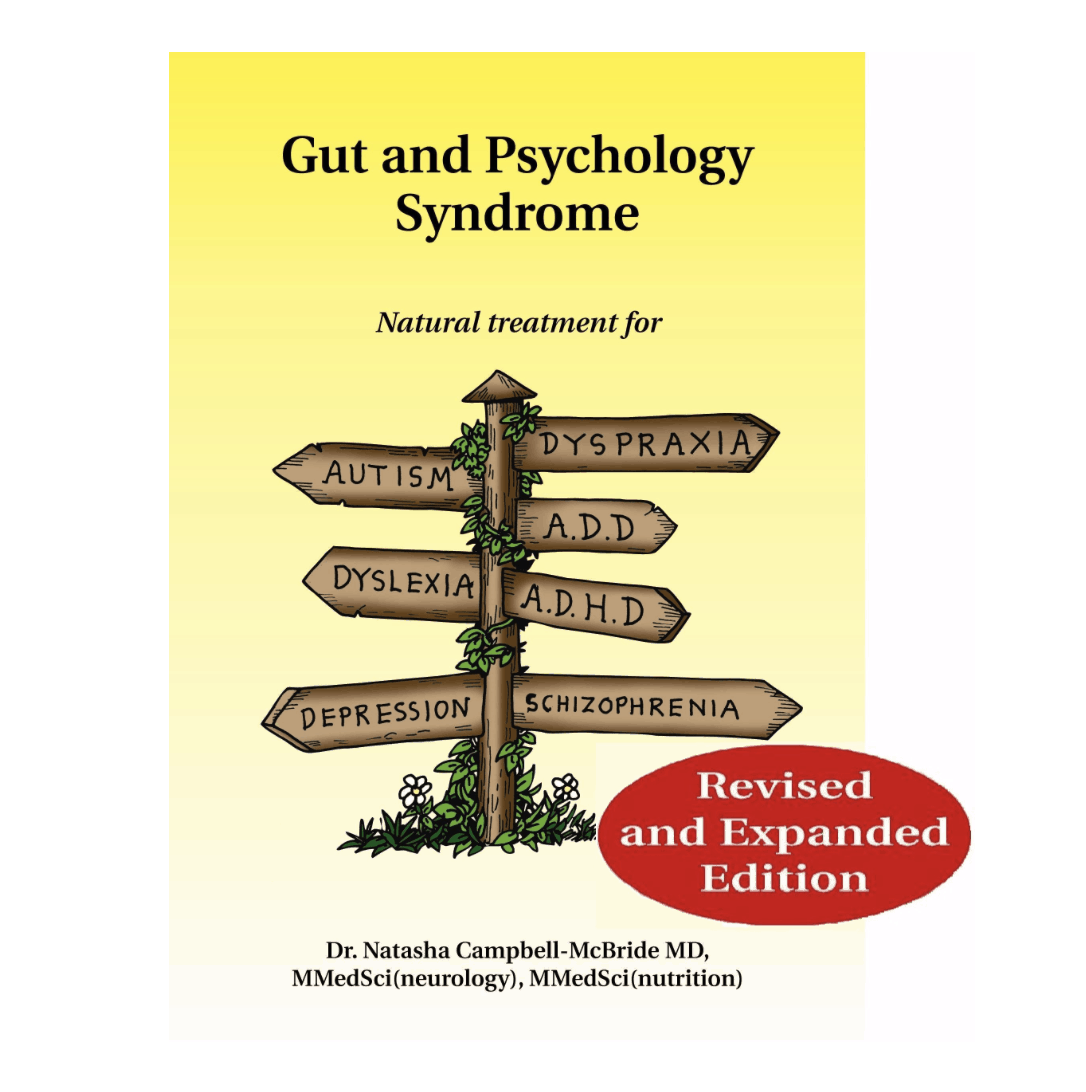
GAPS stands for Gut and Psychology Syndrome (and also Gut and Physiology Syndrome). It is the title of a book and a nutritional protocol developed by Dr. Natasha Campbell-McBride, a medical doctor with postgraduate degrees in neurology and human nutrition.
Dr. Natasha originally designed the GAPS diet to help her own son recover from autism. As she researched and treated him, she discovered that there is a profound connection between the gut and the brain. When the gut is damaged (leaky gut, dysbiosis, inflammation), toxins, undigested food particles, and inflammatory compounds can enter the bloodstream and affect every other system in the body, including the brain.
This gut-brain-body connection is why GAPS can help with such a wide range of conditions:
- Autism and ADHD
- Dyslexia and dyspraxia
- Depression and anxiety
- Schizophrenia and bipolar disorder
- Allergies and asthma
- Eczema, acne, and other skin conditions
- Autoimmune disease
- Chronic fatigue and fibromyalgia
- IBS, SIBO, Crohn’s, ulcerative colitis
- Food allergies and intolerances
- Behavioral and learning issues in children
Hippocrates said it more than 2,000 years ago: all disease begins in the gut. Dr. Natasha built a protocol around that ancient truth, and the protocol works because it addresses the root cause.
“It literally changed my life. I honestly do not think I would be where I am today without having followed the GAPS diet.” — Marisa Tolsma, Certified GAPS Coach

The Three Phases of GAPS
The GAPS protocol has three phases, each with a different purpose:
Phase 1: The GAPS Introduction Diet
The most intensive and most healing phase. The Intro Diet has 6 progressive stages, beginning with the most restrictive (Stage 1: meat stock, boiled meats, well-cooked vegetables, fermented juice) and gradually adding new foods as your gut heals. Most people spend 3 to 6 weeks in the Intro Diet total, though it can take longer.
Phase 2: The Full GAPS Diet
The maintenance phase. This is where you eat a wide variety of nutrient-dense, traditional foods (meats, fish, eggs, vegetables, fermented foods, fruits, nuts, honey) and continue rebuilding the gut and gut flora. Dr. Natasha recommends staying on Full GAPS for a minimum of 18 to 24 months.
Phase 3: The Transition Phase
Once gut healing is solid, you can begin gradually reintroducing foods that were not allowed during GAPS (some grains, starches, and other foods) while maintaining the foundation of nutrient-dense, traditional eating. Most people on a Weston A. Price or Nourishing Traditions style diet are essentially in a permanent gentle Transition Phase.
GAPS Introduction Diet: All 6 Stages at a Glance
Here is what is added at each stage of the GAPS Introduction Diet. Each stage builds on the previous one, so you continue eating all the previous foods as you add new ones.
| Stage | Foods to Add |
| Stage 1 | Homemade meat stock, soups with boiled meat and vegetables (no fiber), boiled fish, animal fats, ginger and chamomile tea, fermented vegetable juice (start with 1 teaspoon), sea salt |
| Stage 2 | Add raw organic egg yolks, stews and casseroles with meats and vegetables, homemade ghee, increased amounts of fermented vegetable juice |
| Stage 3 | Add ripe mashed avocado, scrambled eggs cooked in animal fat, GAPS pancakes (squash, egg, nut butter), fermented vegetables themselves (not just the juice) |
| Stage 4 | Add grilled and roasted meats (no charred bits), cold-pressed olive oil, freshly pressed carrot juice diluted with water, GAPS-legal baked goods (nut flour, squash, eggs) |
| Stage 5 | Add cooked apple (applesauce), soft raw vegetables (peeled cucumber, lettuce), more freshly pressed juices (celery, cabbage, lettuce) |
| Stage 6 | Add raw fruits (berries, peeled apple, ripe banana), raw honey in small amounts, more raw vegetables. Once stable, ready to transition to Full GAPS. |
I have a full post on each stage of the GAPS Introduction Diet, with photos, recipes, and detailed guidance:
- GAPS Diet Introduction Phase Stage 1
- GAPS Diet Introduction Phase Stage 2
- GAPS Diet Introduction Phase Stage 3
- GAPS Diet Introduction Phase Stage 4
- GAPS Diet Introduction Phase Stage 5
- GAPS Diet Introduction Phase Stage 6
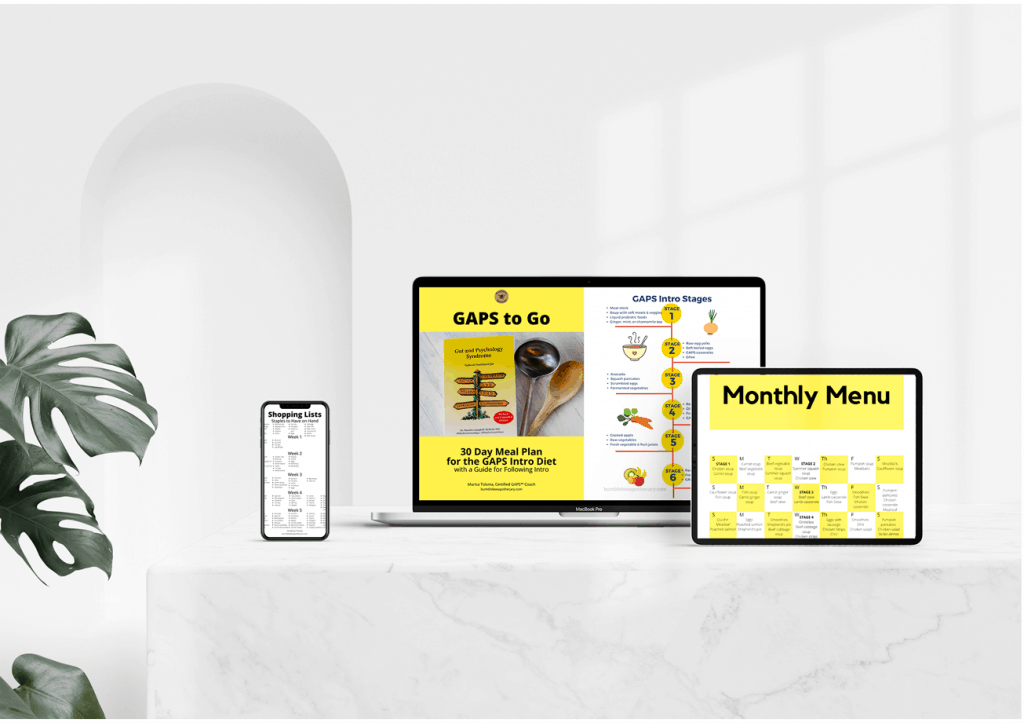
Want a done-for-you plan for the whole first month?
Understanding the stages is one thing. Knowing exactly what to cook for breakfast, lunch, and dinner on day 3 of Stage 2 is another. GAPS to Go is my complete 30-day GAPS Intro meal plan with recipes, cooking instructions, and stage progression built in. It takes the guesswork out entirely and gives you something concrete to follow from day one.
How the GAPS Diet Actually Works
The protocol works through three main mechanisms:
1. It removes foods that damage the gut
Grains, refined sugars, starchy vegetables, processed foods, industrial seed oils, and pasteurized dairy can all contribute to leaky gut and feed pathogenic gut flora. Taking these out gives the gut a chance to stop being constantly irritated. If you want to be clear on what foods to eat and what to avoid, check out my free GAPS diet food list here.
2. It provides the exact foods the gut needs to repair
Homemade meat stock is rich in gelatin, amino acids like glycine and proline, and minerals that literally rebuild the gut lining. Fermented foods restore beneficial bacteria. Animal fats provide the building blocks for new cell membranes. Cooked vegetables provide minerals without the fiber that can be irritating to a damaged gut. Check out my gut healing foods list here.
3. It supports detoxification
As the gut heals and pathogenic flora die off, the body releases toxins that have been stored for years. The protocol supports this gentle detox through fermented foods, juicing (in later stages), epsom salt baths, and adequate animal fats to bind and remove toxins.
The Foundation of GAPS: Homemade Meat Stock
If there is one thing I want you to take from this entire post, it is this: meat stock is the foundation of GAPS. Not bone broth. Meat stock.
Bone broth is made from boney bones, often previously cooked, and simmered for 12 to 48 hours. It is high in histamines and glutamic acid, which can make sensitive guts feel worse, especially early in healing.
Meat stock is made from raw, meaty bones (a whole pasture raised chicken, chicken thighs, drumsticks, wings, beef shanks, neck bones, ox tail) cooked for a much shorter time, about 1.5 to 3 hours for chicken (~3 hours for a big pasture raised chicken), and 4 to 6 hours for beef, pork, lamb, or game. The result is gentle, healing, and rich in the exact compounds your gut needs.
Here is my full meat stock recipe. You will drink meat stock with every meal, between meals, in soups, in stews, and as a healing tea. It is non-negotiable.
What You Eat on Full GAPS
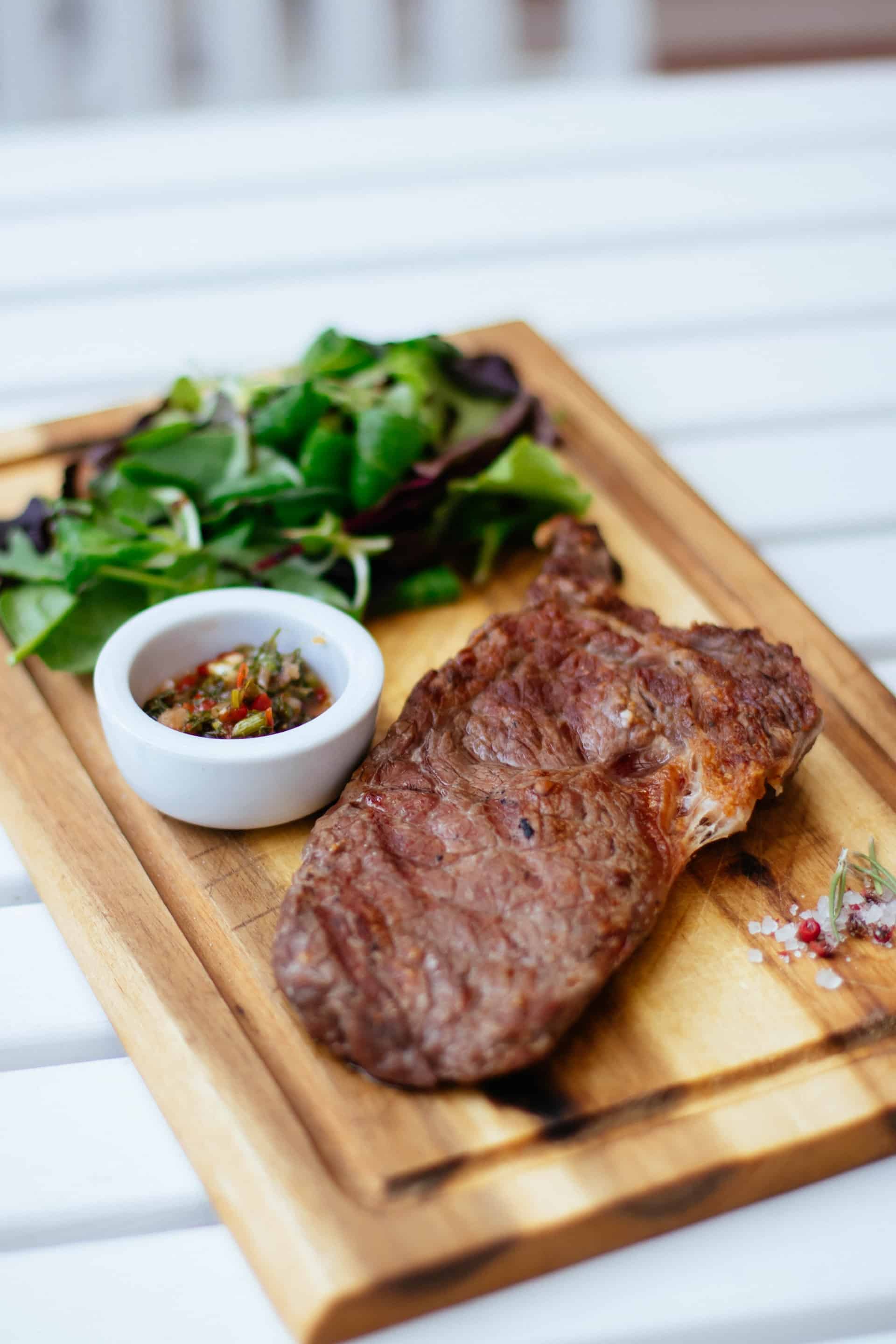
Once you’ve worked through the Introduction Diet (or if you start with Full GAPS directly), the food list opens up to include a wide variety of nutrient-dense, traditional foods.
Foods to enjoy:
- Fresh meats: beef, lamb, pork, chicken, turkey, duck, game, organ meats
- Fish and shellfish: fresh or frozen, all varieties
- Eggs: pasture raised, organic, ideally raw or soft-cooked
- Animal fats: grass fed butter, ghee, tallow, lard, duck fat
- Cold-pressed oils: olive oil, coconut oil (used cold)
- Non-starchy vegetables: cooked, raw, or fermented
- Fermented foods: sauerkraut, fermented pickles, fermented carrots, kimchi, cultured dairy
- Fruits in moderation: berries, apples, citrus, melons, peaches, plums, bananas
- Nuts and seeds: soaked, sprouted, or ground into nut flour
- Raw honey in moderation
- Fermented dairy: 24-hour homemade yogurt, kefir, sour cream, aged cheeses (if tolerated)
Foods to avoid:
- All grains (wheat, rice, corn, oats, barley, rye, quinoa, buckwheat)
- Refined sugar and artificial sweeteners
- Starchy vegetables (potatoes, sweet potatoes, parsnips, yams)
- Most beans and legumes
- Pasteurized dairy and processed cheeses
- Processed foods, packaged foods, canned soups, breakfast cereals
- Industrial seed oils (canola, soybean, corn, sunflower, vegetable oil)
- Soy products
- Coffee (limited or avoided in early stages)
- Alcohol (in early stages)
“We’ve been doing GAPS for almost a year. I started bedridden, but at some points I was sleeping 14–16 hours a day! I’m about 80–90% back to normal with my energy and other symptoms I overlooked for decades!” — community member, YouTube comment
What to Expect When You Begin GAPS
Knowing what’s coming makes the journey so much gentler. Here’s what most people experience in the first few weeks of GAPS:
Week 1: Die-Off
As pathogenic gut flora die off, they release toxins, and you may feel achy, foggy, tired, headachy, or generally yucky. Die-off is actually a good sign, it means the protocol is working, but it can feel scary if you don’t know what it is. Drink more meat stock, take Epsom salt baths, rest, and trust the process.
Weeks 2 to 4: Adjustment
Your body adjusts to the new way of eating. You may notice clearer skin, better sleep, improved digestion, more stable energy, and a calmer mood. You’ll also be settling into a new kitchen rhythm with regular stock-making and meal prep.
Months 2 to 6: Healing
Many of the most dramatic transformations happen here. Skin clears. Inflammation calms. Energy stabilizes. Brain fog lifts. For children, behavioral and developmental changes often emerge in this window.
Months 6 to 24: Maintenance
On Full GAPS, you continue to nourish your gut and body deeply. Healing continues at a quieter pace. Many people see their oldest, deepest symptoms (chronic pain, autoimmune flares, food intolerances) ease or resolve completely in this window.
“We have seen so much improvement with our 5 year old! He used to sleep terribly and now sleeps 11 hours straight a night. His eczema went away, and he started talking way more and wants to play and interact. He even sings songs. He was considered nonverbal severe. But not anymore.” — Marisa’s coaching membership community member
Frequently Asked Questions About the GAPS Diet
The GAPS diet is a gut healing protocol that uses traditional, nutrient-dense foods (meat stock, fermented foods, animal fats, well-cooked vegetables) to heal leaky gut, restore beneficial gut bacteria, and address conditions rooted in poor gut health. It was developed by Dr. Natasha Campbell-McBride, a neurologist and nutritionist.
The GAPS Introduction Diet has 6 progressive stages. Each stage builds on the previous one by adding new foods. After completing the 6 Intro stages, you transition to the Full GAPS Diet, which is the maintenance phase that typically lasts 18 to 24 months.
Most people stay on the Full GAPS Diet for a minimum of 18 to 24 months. The Introduction Diet takes 3 to 6 weeks for most people, though it can take longer. Healing is highly individual: some people feel dramatically better within weeks, others take many months for deeper symptoms to resolve.
The GAPS diet is based on clinical observations by Dr. Natasha Campbell-McBride and a long tradition of using nourishing foods for gut healing. Large clinical trials specifically on GAPS are limited, though research on the gut-brain connection, the role of gut microbiome in disease, and the value of fermented foods has expanded enormously in recent years.
GAPS is closely related to the Specific Carbohydrate Diet (SCD), which was created by Dr. Sidney Haas in the 1920s. Dr. Natasha based the GAPS diet on SCD with significant additions, particularly the emphasis on meat stock, fermented foods, animal fats, and the gut-brain connection.
This is what GAPS was originally developed for. Many families report meaningful improvements in autism symptoms, including sleep, communication, behavior, sensory processing, and digestion. Results vary by individual, and GAPS is best viewed as one part of a broader supportive approach, not a sole intervention.
Leaky gut (also called increased intestinal permeability) is a condition where the tight junctions between the cells of the gut lining loosen, allowing undigested food particles, toxins, and bacteria to pass into the bloodstream. The body responds with inflammation, which can show up as digestive issues, skin problems, autoimmune symptoms, brain fog, mood issues, and many other systemic problems.
Yes. GAPS was originally created for a child (Dr. Natasha’s own son). It can be done safely with babies through baby GAPS, with toddlers, and with older children. I have guides for baby GAPS and toddler GAPS on the blog. Always work with a qualified healthcare provider when making significant dietary changes for kids.
Ready to Start?
🌿 Free: Gut Wellness Getting Started Guide, a simple, beginner-friendly walkthrough to start supporting your gut today.
🌿 $49: GAPS to Go, my complete 30 day GAPS Intro meal plan with cooking instructions and stage progression. Perfect if you want a clear, done-for-you plan.
🌿 Coaching: The Ancestral Gut Reset, my step-by-step coaching program with live calls, community support, and the Picky Eating Blueprint included.
What is the GAPS diet? The GAPS diet explained in a nutshell video
Related Posts You’ll Love
How to Start the GAPS Introduction Diet
How the GAPS Diet Changed Our Lives
Meat Stock Recipe for the GAPS Diet
Sauerkraut Recipe for the GAPS Diet
How to Make a GAPS Diet Baby Bottle
How to Get Your Kitchen Ready for the GAPS Diet
Have you heard of the GAPS diet?
Do you know someone who could be helped by it? Share your experience in the comments!
Join our traditional wisdom community, and grab a free Gut Wellness Getting Started Guide when you subscribe!
Want to work with Marisa, Certified GAPS Coach?
I offer a complete GAPS Protocol Support Coaching Package. You can learn more here.
Grab your own copy of Gut and Psychology Syndrome
GAPS diet meal plan
Looking for a GAPS intro meal plan? GAPS to Go is a 30 day meal plan for the GAPS introduction diet that tells you what to eat each day, with complete cooking instructions, and guidance on when to move to each intro diet stage. Check out GAPS to Go here.
Follow along with Bumblebee Apothecary
Thanks for stopping by! Be well! 🐝
Research and References
The GAPS diet draws on the concept that the gut is central to overall health, an idea increasingly explored in modern research on the microbiome, the gut-brain axis, and intestinal barrier function. While GAPS as a specific protocol has limited large-scale clinical study, the mechanisms it works through are well documented in the peer-reviewed literature. For further reading:
- Appleton J. “The Gut-Brain Axis: Influence of Microbiota on Mood and Mental Health.” Integrative Medicine (NIH/PMC). https://pmc.ncbi.nlm.nih.gov/articles/PMC6469458/
- Martin CR, et al. “The Brain-Gut-Microbiome Axis.” Cellular and Molecular Gastroenterology and Hepatology (NIH/PubMed). https://pubmed.ncbi.nlm.nih.gov/30023410/
- Dimidi E, et al. “Fermented Foods: Definitions and Characteristics, Impact on the Gut Microbiota and Effects on Gastrointestinal Health and Disease.” Nutrients (NIH/PMC). https://www.ncbi.nlm.nih.gov/pmc/articles/PMC6723656/
- Leeuwendaal NK, et al. “Fermented Foods, Health and the Gut Microbiome.” Nutrients (NIH/PMC). https://www.ncbi.nlm.nih.gov/pmc/articles/PMC9003261/
The complete GAPS protocol is detailed in Gut and Psychology Syndrome by Dr. Natasha Campbell-McBride, MD, the neurologist and nutritionist who developed it.
GAPS™ and Gut and Psychology Syndrome™ are the trademark and copyright of Dr. Natasha Campbell-McBride. The information in this blog post is my personal experience and opinion as a Certified GAPS Coach. It is for general information purposes only, may not apply to you as an individual, and is not a substitute for your own physician’s medical care or advice. Always seek advice from your physician or another qualified health provider with any questions you may have regarding nutrition, medical conditions, and advice. Never disregard medical advice or delay seeking medical care because of something you have read on this blog.
💛 Marisa