By Marisa Tolsma, Certified GAPS Coach | Bumblebee Apothecary
Quick Answer
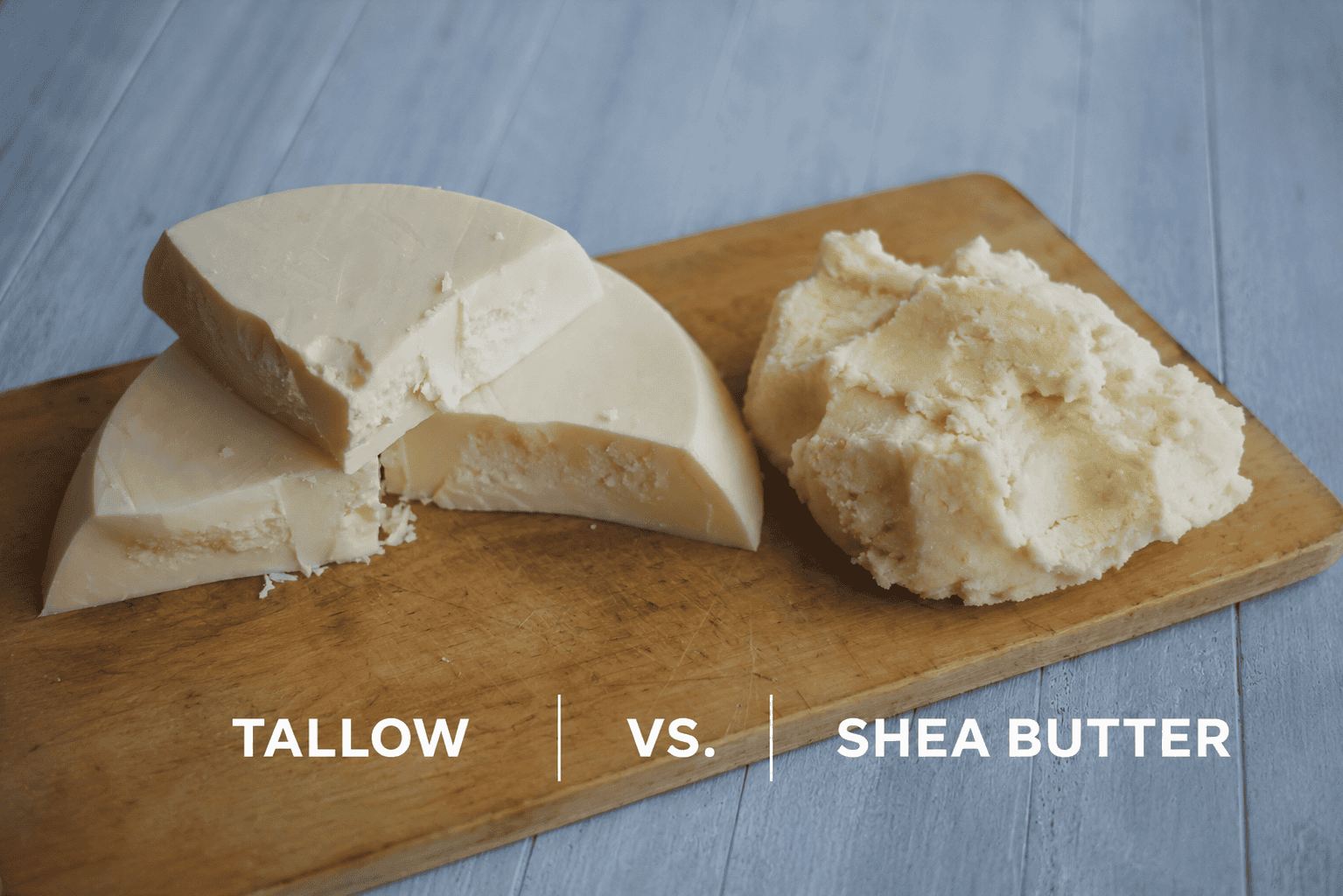
Tallow and shea butter are both excellent natural skincare ingredients, but tallow is a closer biological match to human skin and contains a wider range of skin-nourishing nutrients, while shea butter is the better plant-based option with strong moisturizing properties. In my experience, tallow is the more powerful choice for healing damaged skin, addressing eczema and acne, and deeply nourishing the skin barrier. Shea butter is wonderful for everyday moisturizing and works beautifully as a vegan alternative.
Pin it for later
This post contains affiliate links, which means I make a small commission at no extra cost to you. Get my full disclosure here.
At a Glance: Tallow vs. Shea Butter
| Feature | Grass Fed Beef Tallow | Shea Butter |
| Source | Rendered beef fat (animal) | Nut of the shea tree (plant) |
| Biological match to human skin | Very close | Less close |
| Vitamin content | A, D, E, K, B12 | A, E, F |
| Naturally antimicrobial | Yes (palmitoleic acid) | Mild |
| Anti-inflammatory | Yes (CLA) | Yes (cinnamic acid) |
| Best for | Healing damaged skin, eczema, acne, anti-aging | Everyday moisturizing, sensitive skin, vegan use |
| Comedogenic rating | 1 (very low) | 0 (none) |
| Shelf life | 1+ year | 1 to 2 years |
| Vegan | No | Yes |
| Smell when refined | Mild or odorless (wet rendered) | Mild nutty scent (refined) |
I get asked this question all the time: tallow or shea butter, which is better for skin?
The honest answer is, they are both wonderful. I use both in my skincare routine, and both have a place in my recipe library. But they are not the same thing, and depending on what your skin needs, one might be a much better fit than the other.
Let me walk you through how they compare so you can choose the right one for your family.
What Is Tallow?
Tallow is rendered beef fat, traditionally made from suet (the fat from around the kidneys and internal organs of cattle). It has been used as a skincare ingredient for thousands of years, long before commercial cosmetics existed.
What makes grass fed beef tallow so special for skin is its fatty acid profile, which is remarkably similar to the natural oils your skin already makes. Your skin recognizes it. Your skin uses it. That is why tallow absorbs so deeply and works with your skin, not against it.
Read more about all the beef tallow uses here and learn how to render tallow at home here.
What Is Shea Butter?
Shea butter comes from the nut of the shea tree, which grows in West Africa. The nuts are harvested, crushed, and pressed to extract a rich, buttery fat that solidifies at room temperature.
Shea butter has been used for centuries by traditional African cultures for skincare, hair care, and cooking. It is a wonderful plant-based fat that is high in vitamin E and other nourishing components.
There are two main forms: unrefined (raw) shea butter, which has a stronger nutty smell and yellowish color, and refined shea butter, which is filtered, lighter colored, and milder smelling.
Side-by-Side: Tallow vs. Shea Butter
Nutrient Content
Tallow contains:
- Vitamins A, D, E, K, and B12 (this combination is found together only in animal foods)
- Conjugated linoleic acid (CLA) with powerful anti-inflammatory properties
- Stearic acid, which repairs damaged skin and improves flexibility
- Oleic acid (omega 9), which helps other components penetrate deeply
- Palmitoleic acid (omega 7), naturally antimicrobial and a building block of skin cells
- Palmitic acid, which improves the protective barrier function of skin
Shea butter contains:
- Vitamin A
- Vitamin E
- Vitamin F (essential fatty acids: linoleic and oleic)
- Cinnamic acid, which has mild anti-inflammatory and UV-protective properties
- Triterpenes, which support healing
Winner: Tallow has a wider range of skin-essential vitamins and a fatty acid profile that more closely mimics human skin’s natural oils.
Skin Compatibility
This is where tallow really shines. Because the fatty acid composition of grass fed beef tallow is so similar to the natural sebum your skin produces, your skin recognizes it and uses it more efficiently than plant-based fats.
Shea butter is wonderful and well-tolerated by most people, but it is still a plant fat with a fatty acid profile that is different from human skin oils. It moisturizes beautifully but does not have that same biomimetic quality.
Winner: Tallow for biological compatibility with human skin.
Best Uses for Each
Tallow is the better choice for:
- Acne and acne-prone skin (it is noncomedogenic and antimicrobial)
- Eczema and chronic dry skin patches
- Anti-aging support (vitamins A and D specifically)
- Diaper rash and baby skin
- Healing damaged or sun-exposed skin
- Sensitive, reactive, or rosacea-prone skin
- Deeper skin healing where you want maximum nutrient density
Shea butter is the better choice for:
- Vegan or plant-based skincare
- Daily, light moisturizing for already healthy skin
- Lip balms and lotions where you want a buttery texture
- Hair and beard care (it adds a soft, smooth finish)
- Stretch mark prevention during pregnancy
- People who do not have access to high-quality grass fed tallow
Texture and Feel
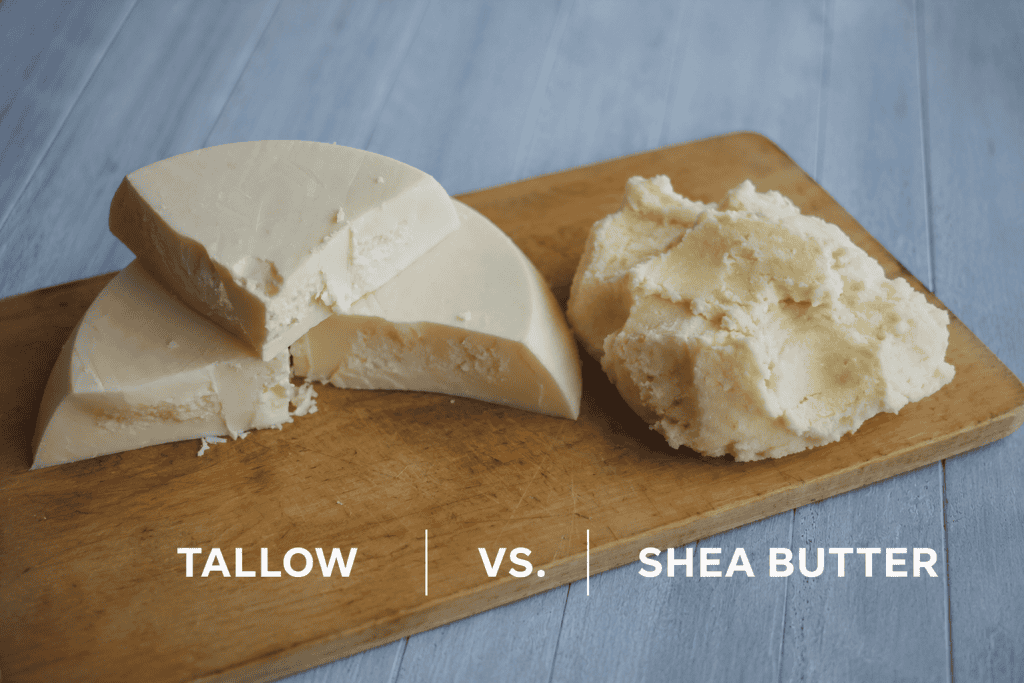
Tallow is firmer at room temperature and can feel heavier on the skin if you use too much. The trick with tallow is using a tiny amount; a pea-sized dollop is enough for the whole face. Whipped tallow balm is softer and easier to spread.
Shea butter has a smoother, more buttery texture out of the jar. It melts on contact with skin and spreads easily. Some people find it a touch greasier than tallow, especially if used in large amounts.
Winner: It depends on personal preference. Many people find shea butter easier to spread, while others love how concentrated tallow is.
Smell
Properly wet-rendered, leaf fat tallow is essentially odorless. Poorly rendered tallow can have a strong beefy smell, which is why sourcing matters so much.
Unrefined shea butter has a distinct nutty, sometimes smoky aroma that some people love and others find too strong. Refined shea butter is much more neutral.
Winner: It depends on preference, but for those who want a truly neutral base, both can be neutralized with proper sourcing.
Cost and Accessibility
Shea butter is more widely available and tends to be more affordable, especially at the entry level. You can find it at most natural grocery stores and online.
Grass fed tallow is becoming more available as it grows in popularity, but high-quality, wet-rendered, grass fed leaf fat tallow takes more effort to source. You can render it yourself from leaf fat (often free or very cheap from a local farm or butcher) or buy it pre-rendered from trusted small producers.
Winner: Shea butter for accessibility, tallow for value when you render your own.
The Deeper Question: Why Are You Reaching for Either One?
If you are dealing with persistent skin issues, eczema that will not quit, acne that keeps coming back, dry patches that nothing seems to fix, the topical product is only ever part of the story. Tallow and shea butter can both help your skin in real, meaningful ways. But the deepest, most lasting healing tends to happen when we also support the gut.
I learned this from my own healing journey. I had cystic acne, fatigue, and frequent headaches for years before I started addressing my gut health through the GAPS diet in 2011. Topical care was helpful, but it was healing my gut that actually cleared my skin for good.
The skin is a reflection of the gut. Dr. Natasha Campbell-McBride teaches this. Hippocrates taught it more than 2,000 years ago.
If you are using tallow or shea butter and you are not getting the results you hoped for, your gut might be ready for some support. I made a free Gut Wellness Getting Started Guide that walks you through where to start. It is the same simple foundation I use with my coaching clients.
Can You Use Tallow and Shea Butter Together?
Yes, and I do it all the time. Combining tallow and shea butter in a recipe gives you the deep nutrient density of tallow with the lighter, more spreadable texture of shea butter.
A few of my recipes that combine both:
- My DIY tallow face moisturizer (recipe variations include shea butter for a lighter feel)
- My shea butter lotion recipe and my DIY lotion recipe
- Many of my whipped balms can be adjusted to include shea butter
If you want every tallow and natural living recipe I make for my family of 7 in one beautiful place, my Natural Living Recipes book has 50+ of my favorite recipes, organized and ready to make.
My Honest Verdict
If I had to pick one ingredient to have in my skincare cabinet, it would be tallow. The nutrient density, the biological match to human skin, the versatility, the way it heals stubborn skin issues, nothing else compares.
But shea butter has its place, especially for:
- People who prefer plant-based skincare
- Lighter, everyday moisturizing
- Vegans or people who avoid animal products
- People who cannot access quality grass fed tallow
In my own routine, tallow is my workhorse. Shea butter is a supporting player I reach for when I want something a little lighter or more buttery in a specific recipe.
Frequently Asked Questions
Both are excellent for dry skin, but tallow is the more deeply healing option, especially for very dry, cracked, or chronically dry skin. The fatty acid profile of tallow is closer to human skin’s natural oils, which is why it absorbs more deeply and helps prevent moisture loss. Shea butter is a wonderful daily moisturizer for less severely dry skin.
In my experience as a Certified GAPS Coach working with many families, tallow tends to be the more effective choice for eczema. The combination of fat soluble vitamins A, D, E, and K plus anti-inflammatory CLA and biological compatibility with skin makes tallow remarkably soothing for eczema-prone skin. Shea butter can help too, but tallow is what I reach for first.
Tallow is generally the better choice for acne prone skin. It is naturally antimicrobial (thanks to palmitoleic acid), anti-inflammatory, and noncomedogenic, meaning it does not clog pores. Shea butter is also non-comedogenic, but it does not have the same antimicrobial properties.
Sometimes, but not always. Shea butter and tallow have different melting points and different textures, so a straight 1:1 substitution may give you a different consistency. For balms and lotion bars, you can usually substitute by weight with some experimenting. For tallow balm specifically, substituting shea butter will give you a softer, more buttery result.
Yes, shea butter is plant-based and vegan. It comes from the nut of the shea tree, not from any animal source. Tallow, on the other hand, is rendered beef fat and is not vegan.
Tallow has the edge for anti-aging because it contains vitamins A, D, E, and K plus CLA, all of which support skin regeneration and reduce inflammation. Shea butter contains vitamin E and triterpenes that also help with anti-aging, but tallow’s broader nutrient profile and skin-mimicking fatty acids make it the more powerful option.
Unrefined shea butter has a distinct nutty, sometimes smoky aroma. Refined shea butter is much more neutral. Some people love the natural smell, others prefer refined versions for everyday use.
Properly wet-rendered tallow made from leaf fat is essentially odorless. Poorly rendered or trim fat tallow can have a beefy smell. For skincare, always use the highest quality, wet-rendered, leaf fat tallow you can find or make.
Ready to Try Either One?
Whether you choose tallow, shea butter, or both, here are 3 ways to take the next step:
🌿 Free: Gut Wellness Getting Started Guide, because beautiful skin starts in the gut. A simple beginner’s guide to gut wellness.
🌿 Book: Natural Living Recipes, 50+ of my favorite DIY tallow and natural living recipes in one beautiful book.
🌿 Coaching: The Ancestral Gut Reset, hands-on coaching for people who want lasting wellness from the inside out.
Related Posts You’ll Love
- How to Make Tallow Balm
- Beef Tallow Uses: Everything You Need to Know
- Tallow vs. Lard: What’s the Difference?
- Tallow Skin Care: The Complete Guide
- Is Tallow Good for Acne?
- Tallow and Gut Health
Join our traditional wisdom community, and grab a free Natural Beauty Recipes eBook when you subscribe!
Want to work with Marisa, Certified GAPS Coach?
I offer a complete step-by-step coaching experience through The Ancestral Gut Reset. You can learn more here.
GAPS™ and Gut and Psychology Syndrome™ are the trademark and copyright of Dr. Natasha Campbell-McBride. The information in this blog post is my personal experience and opinion as a Certified GAPS Coach. It is for general information purposes only, may not apply to you as an individual, and is not a substitute for your own physician’s medical care or advice. Always seek advice from your physician or another qualified health provider with any questions you may have regarding nutrition, medical conditions, and advice. Never disregard medical advice or delay seeking medical care because of something you have read on this blog.
💛 Marisa
Let's turn food into wellness