
Let’s bring this traditional fat back, and talk about beef tallow benefits.

Beef tallow benefits
It’s no mystery that I am a huge fan of grass fed tallow. I love how versatile tallow is, and how many things you can make with it. Soap, balm, salves, and the most delicious French fries ever. But what about tallow for our health?
Tallow, in my opinion, is the top dog in all of the cooking fats. Want to learn why and how to use it for your own family? Keep reading…
Pin it for later
This post contains affiliate links, which means I make a small commission at no extra cost to you. Get my full disclosure here.
What is tallow?
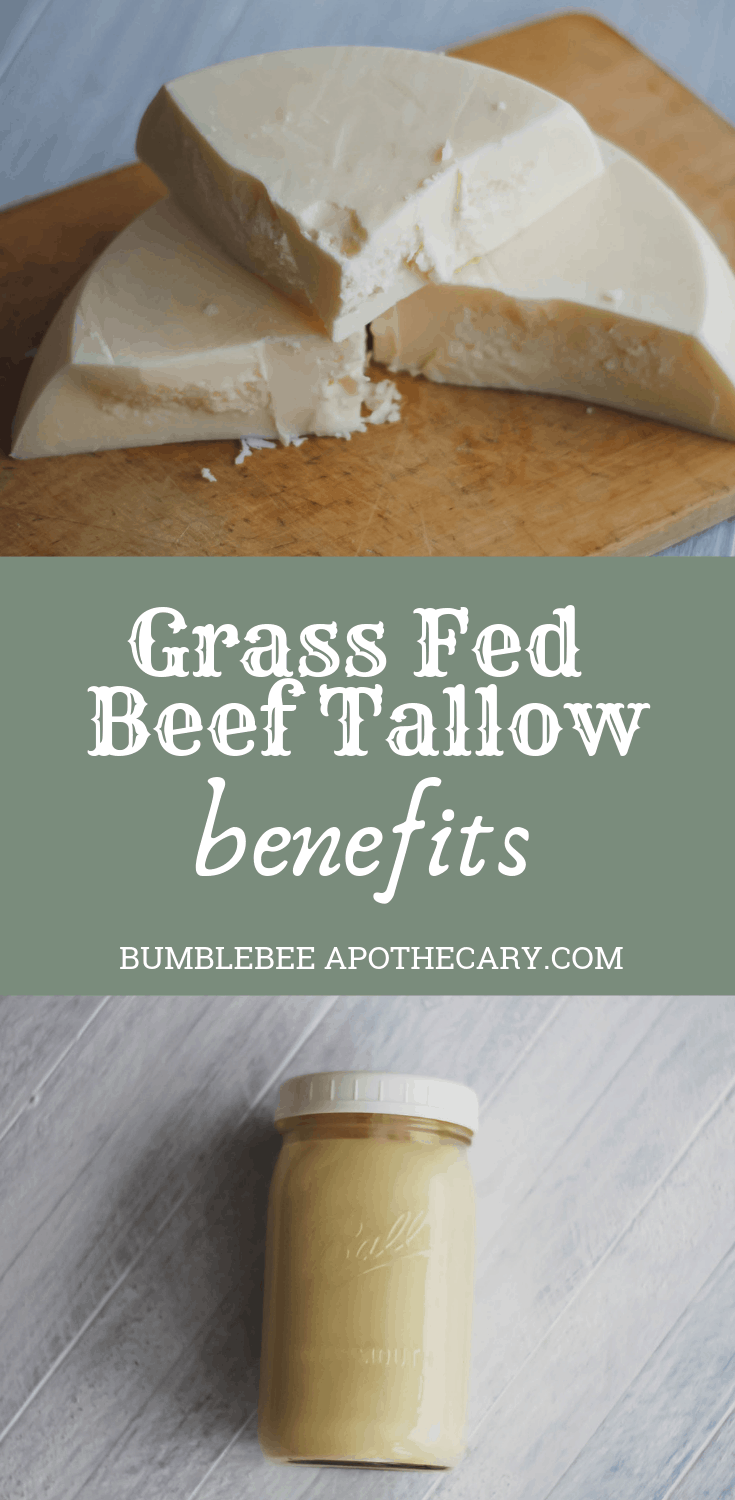
Beef tallow is rendered fat from the meat.
Think about when you cook some meat, the liquid that’s left in the pan that hardens as it cools – that is what tallow is. It is one of my favorite ingredients – and for good reason.
Ready to learn all about beef tallow and how it can help your family with all sorts of benefits? Keep reading…
Beef tallow uses
Beef tallow is an excellent ingredient because it can be used for so many things. Here are just a few:
- Cooking
- Soaps
- Lotions
- Salves and balms
- and more
For centuries, humans have utilized tallow to create essentials – and for good reason. No matter how many tallow alternatives I try, I always find myself coming back to tallow.
Tallow is simply the best. Keep scrolling to learn all about the amazing benefits of beef tallow…
Is tallow healthy?
In our great grandparents’ day, tallow was widely used. Traditionally, it was a very popular cooking fat. It has a very high smoke point, and adds wonderful flavor to foods. The saturated fat in tallow is what allows tallow to have such a high smoke point.
Wait a second, saturated fat? Isn’t that bad? Well, for a while, certain “experts” thought so. This is due to incomplete studies claiming that saturated fat causes heart disease. Sadly, this is still somewhat common thinking. The tide is changing, though!
Once this misinformation about animals fats became mainstream, tallow and other fats were replaced with things like canola and corn oil. To this day, there is no scientific evidence that saturated fat causes heart disease. However, there are a myriad of studies showing that industrial seed oils (like canola and corn oil) are extremely inflammatory and very damaging to our health (source).
Tallow, on the other hand, is a very healthy fat. Many people use it as an important part of gut wellness support.
More and more people are starting realize this, which makes me very happy. That’s one of the reasons I like to talk about beef tallow benefits on my blog and YouTube channel. I want to help spread the word. I want more and more people to ditch toxic, inflammatory “vegetables” oils and embrace traditional animal fats again.
Beef tallow vs. coconut oil
When comparing beef tallow to coconut oil, it is important to mention the difference in saturated fat. Many are surprised to hear that coconut oil actually has a much higher amount of saturated fat than beef tallow.
While saturated fat isn’t necessarily a bad thing (as discussed earlier), it’s important to mention.
Another large difference between beef tallow and coconut oil is the flavoring. Because of what each fat is made from, their flavorings are going to be different. Coconut oil tends to have a sweet, coconut-y taste, while beef tallow is going to have a much more mild, beef-y taste to it.
Beef tallow vs. olive oil
Olive oil gets a lot of credit for being the healthy oil on the block. While this is true in the sense that it contains much less saturated fat, that doesn’t necessarily mean that it is ideal for cooking.
Compared to beef tallow, olive oil has a very low smoke point – meaning that it will burn easily when cooking with it. The fragile olive oil is better used in things like salad dressings, and not heated.
It may come as a surprise, but I barely have olive oil in my house because I have beef tallow.
Ready to learn the amazing benefits to beef tallow? Keep scrolling…
What are the benefits of beef tallow?
Before we jump into all the wonderful benefits of beef tallow, let’s make one thing clear. While all unrefined beef tallow is good, there is big difference in the nutrient content of grass fed tallow compared to tallow from conventionally raised beef (source).
All of the information I’ll be sharing applies to 100 % grass fed beef tallow.
Grass fed beef tallow is:
- abundant in conjugated linoleic acid (CLA) which has powerful anti-inflammatory properties
- rich in minerals
- full of fall soluble vitamins A, D, E, K, and B12
Tallow can be used as a wonderful cooking fat, and an ingredient in food. Some examples are French fries and pie crusts, but there are so many possibilities. When we eat tallow, we consume these nutrients. These nutrients can help support our immune systems, as well as many other body functions.
Health benefits
Eating healthy animal fats like tallow, duck fat, butter, etc. along with foods helps us to absorb and assimilate the vitamins in those foods. For example, eating vegetables that have been fried in tallow or have melted butter on them allows our bodies to better absorb and use the vitamins in the vegetables.
And I don’t know about you, but I definitely find my vegetables to be way tastier this way also!

Beef tallow benefits for skin
Healthy animals fats are also really important for brain, skin, gut, and hormone health. Just like when I’ve talked about why skin loves grass fed tallow, these same nutrients work to make us healthy on the inside when we eat tallow. The same regenerating and rebuilding activity takes place inside of us.
If you’re new to beef tallow benefits for skin, I wanted to quickly go over that as well. Basically, the nutrients and cell structure of tallow is extremely similar to our skin’s cell structure and the nutrients that our skin needs. Tallow provides the building blocks for rebuilding and repairing our skin. It’s perfect for healing, soothing, moisturizing, and replenishing skin.
Hopefully you’re starting to see why I love tallow so much! It is just so amazing.
Does beef tallow make you fat?
Despite the fact that beef tallow is a type of fat, it does not mean your body will store fat when you eat fats. On the contrary, weight gain is linked to toxicity and hormone imbalance (source). Eating healthy traditional fats can help the body actually lose weight as it supports healthy detox and hormonal balance.
I’ve cooked with tallow for many years in diverse, nutrient dense meals, and I have no problem with weight gain.
Is tallow healthier than butter?
The interesting thing about tallow is the chemical composition that it contains. With no trans fat and at 60% monounsaturated fat, tallow is considered as healthy as butter. That being said, there are some recipes where butter just makes more sense, like my favorite pancake recipe.
Does beef tallow oxidize?
When you are beginning to incorporate beef tallow into your recipes, it is important to keep in mind that certain cooking methods will oxidize the tallow somewhat. Frying and cooking at high temperatures will cause some oxidization.
I strain my tallow after frying in it and use it again and again. In order to keep it fresh, I keep it in the refrigerator.
How to store beef tallow
How you store your beef tallow is one of the most important parts to using your beef tallow in order to keep it healthy and tasting good.
Once it is at room temperature, beef tallow will solidify. If you want to keep it on your kitchen counter, it will last for several weeks, if not longer. This is as long as it is uncontaminated and does not have any water in it. Water in the tallow will cause it to mold.
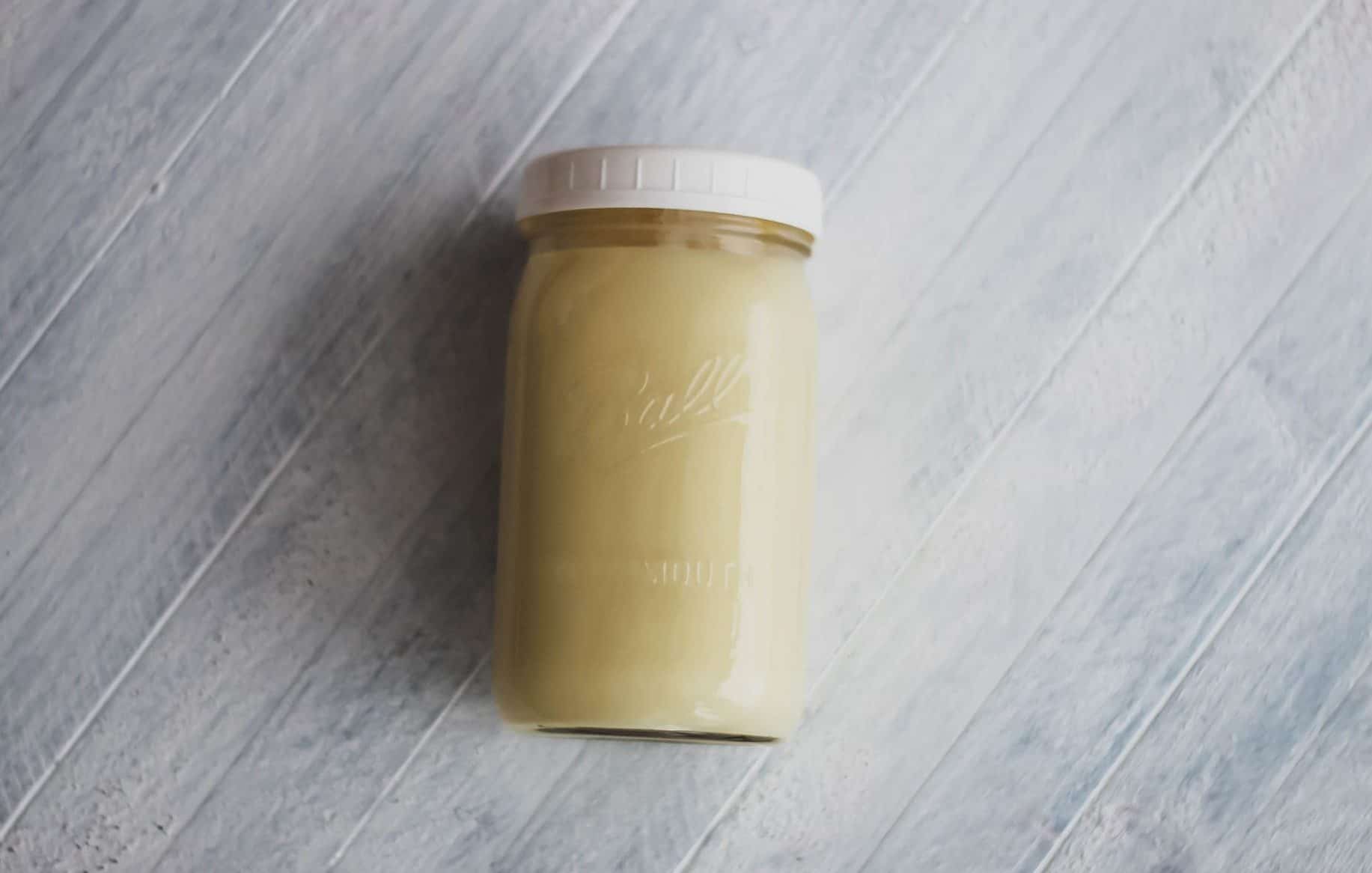
My favorite storage container for tallow that I cook and fry with is a glass mason jar. Sometimes I will also store large chunks of tallow at room temperature with airflow around them.
How long does tallow last?
When it comes to storing tallow on the counter, it can last for several weeks or longer, as long as it is uncontaminated and does not have any water in it.
Tallow will keep for many months in the refrigerator, and indefinitely in the freezer.
This means that any tallow purchased when you buy meat from a cow, you will be able to have tallow stored anytime.
When you have a lot of mouths to feed, this is a good thing.
How do you make tallow?
Basically, you make tallow by rendering beef fat. Rendering just means that the beef fat is heated and melted. Tallow is what the beef fat turns into when it is melted. Once it is cool again, tallow is solid at room temperature.
Beef fat is also sometimes called suet. The type of fat used for making tallow can be any kind, but the best is the fat that surrounds the internal organs. The fat around the kidneys is called leaf fat, and it makes the nicest tallow.
Tallow recipes
Tallow Lip Balm with Honey Recipe
Are you a fan of tallow?
Do you use it for cooking? How about skin care? Share your favorite ways to use tallow in the comments!
Join our traditional wisdom community, and grab a free DIY organic skincare recipes eBook when you subscribe!
Shop this post
Want to pick up a handmade tallow balm or soap?
Check out the Bumblebee Apothecary Shop here.
Follow along with Bumblebee Apothecary
Thanks for stopping by! Be well! 🐝