
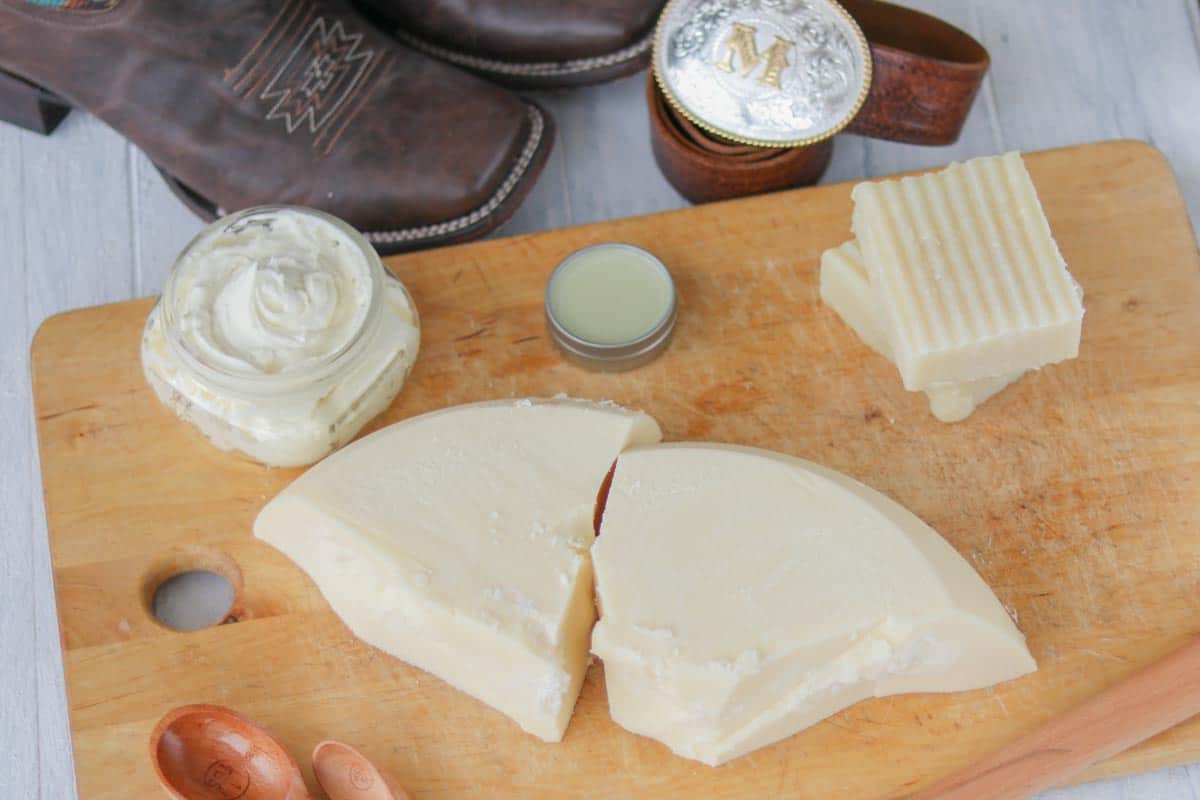
Beef tallow is one of my favorite traditional fats, because it has so many benefits. Tallow is the homesteader’s essential fat. It is amazing for cooking, skincare, household applications, and more. Today I’m going to tell you about beef tallow uses, and the many things you can do with it.
Quick Answer
Beef tallow is rendered beef fat used for cooking, skincare, soap making, candle making, leather conditioning, waterproofing, seasoning cast iron, and so much more. Grass fed beef tallow is one of the most nutrient-dense traditional fats available, rich in fat soluble vitamins A, D, E, K, and B12, conjugated linoleic acid (CLA), and skin-loving fatty acids. It is shelf stable, easy to render at home, and works beautifully in your kitchen, your skincare routine, around the house, and on the homestead.
In this post: What is beef tallow, tallow nutrients and benefits, beef tallow uses in the kitchen, beef tallow uses for skin, hair, and soap, beef tallow uses around the house and homestead, how to make tallow at home, where to buy tallow, and frequently asked questions.
Pin it for later
This post contains affiliate links, which means I make a small commission at no extra cost to you. Get my full disclosure here.
What is beef tallow?
Tallow is rendered beef fat, traditionally made from suet (the fat from around the kidneys and internal organs of cattle), used for cooking, skincare, soap making, candle making, and more. Grass fed beef tallow is rich in fat soluble vitamins A, D, E, and K, conjugated linoleic acid (CLA), and stearic, oleic, and palmitoleic fatty acids, which is why it has been treasured by traditional cultures for centuries.
The word “tallow” most often refers to rendered fat from ruminant animals like cattle, sheep, deer, or bison. Sometimes people use the term loosely for any rendered animal fat, including bear tallow, but most of the time when someone says tallow, they mean beef tallow.
Tallow is different from lard. Lard refers to rendered pork fat, which is another wonderful traditional cooking fat but has a slightly different fatty acid profile and texture. If you’re curious about all the differences between the two, I wrote about tallow vs. lard here.
Tallow vs. suet: what’s the difference?
Suet is the raw, unrendered fat from around the kidneys and internal organs of cattle. When you render suet (cook it down slowly to separate the pure fat from any connective tissue), what you end up with is tallow.
Leaf fat (the fat from around the kidneys) is considered the highest quality starting material because it renders into the whitest, cleanest, most mildly flavored tallow with the highest concentration of beneficial nutrients.
Beef tallow nutrients and benefits
Beef tallow from 100% grass fed, grass finished cattle is one of the most nutrient-dense traditional fats available. The animal eats grass, the grass converts sunlight into nutrients, and those nutrients concentrate in the fat. That’s why grass fed matters so much, the difference between grass fed and grain finished tallow is significant when it comes to nutritional value.
Speaking of nutrition, if you’d like to learn more about eating like our ancestors beyond just tallow, check out my post here to learn all about Ancestral Diet for Beginners.
Here’s what’s in grass fed beef tallow:
- Fat soluble vitamins A, D, E, K, and B12. This particular combination of vitamins is found together only in animal foods. These vitamins support immune function, hormone production, bone health, gut lining repair, and so much more.
- Conjugated linoleic acid (CLA). A fatty acid with powerful anti-inflammatory properties.
- Stearic acid and oleic acid. Both naturally found in human skin and sebum. Stearic acid supports repair and flexibility; oleic acid helps nutrients penetrate deeply.
- Palmitoleic acid (omega 7). A natural building block of skin cells, and naturally antimicrobial.
- Trace minerals. Including small but meaningful amounts of selenium, zinc, and others that support multiple body systems.
I wrote a deeper post on this topic, you can read all about the benefits of beef tallow here. And if you’ve been wondering whether tallow can support your gut health, the answer is a resounding yes. I explain the full connection between tallow and gut wellness in this post.
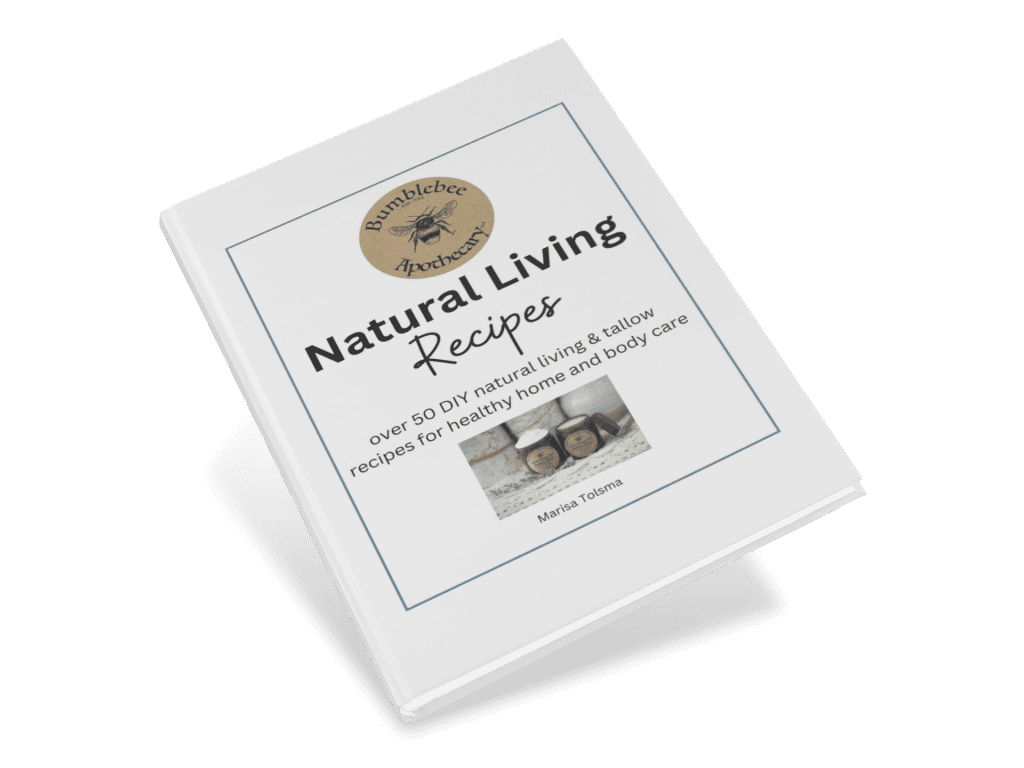
With this many uses for tallow, you’re going to want a place to keep all the recipes organized. My Natural Living Recipes book is a beautiful 92-page printed book with over 50 of my most-loved DIY tallow and natural living recipes, the same ones I make for my family of 7. Tallow balm, soap, shampoo bars, lip balm, face cream, lotion bars, candles, deodorant, and dozens more, all in one beautiful place.

Beef tallow uses in the kitchen
If I had to pick the single most useful traditional fat for a real-food kitchen, it would be tallow. It is shelf stable, has a high smoke point, adds wonderful flavor, and is packed with nutrients. Here are the kitchen uses I rely on every week in my family of 7.
Cooking and frying
Tallow has a smoke point around 400 to 420°F, which makes it ideal for frying, sautéing, and roasting at high heat without breaking down into harmful compounds the way industrial seed oils do. I use it to fry eggs, sauté vegetables, sear meats, and most famously, make beef tallow fries that are crisp, golden, and ridiculously good. Did you know McDonald’s used to fry their French fries in beef tallow? They switched to industrial seed oils in 1990 under pressure from anti-fat activists. The fries have not been the same since.
Baking and pastry
Tallow makes a beautifully flaky pie crust, similar to lard but with a slightly richer flavor. It also works wonderfully in biscuits, savory crackers, and any baked good where you want flakiness and structure. I use it interchangeably with lard in most of my baking, depending on what’s in the fridge.
Adding to soups, stocks, and stews
One of the simplest and most nourishing kitchen habits I’ve built is adding a spoonful of tallow to every bowl of meat stock, soup, or stew. It boosts the calorie density of the meal, makes the fat soluble vitamins in the vegetables more bioavailable, and gives the broth a beautiful, satisfying richness. This is something Dr. Natasha Campbell-McBride specifically recommends on the GAPS diet, and it’s one of the easiest ways to incorporate more healthy animal fats into your day.
Pemmican and homemade sausage
Tallow is a critical ingredient in traditional pemmican, the ancestral survival food made from dried meat, dried berries, and rendered fat. It’s also a wonderful addition to homemade sausage, both for flavor and for the right fat-to-lean ratio.
Seasoning cast iron
Tallow is one of the best fats for seasoning cast iron skillets, Dutch ovens, and griddles. It polymerizes into a hard, durable, non-stick coating that holds up to daily use. I season my cast iron with tallow every few months, and it keeps my pans in beautiful working order.
Conditioning wooden cutting boards and utensils
Tallow works beautifully for keeping wooden spoons, cutting boards, butter boards, and other wooden kitchen tools moisturized and crack-free. Just rub a small amount on the wood, let it soak in, and wipe off any excess.
A quick note from one mom to another
One of the things I love most about tallow is how much it supports gut wellness, the fat soluble vitamins, the anti inflammatory CLA, the way it helps us actually absorb nutrients from the vegetables we cook in it. Gut health is the area of wellness that completely changed my life. Healing my gut with nutrient-dense ancestral foods (tallow included) is what finally cleared my cystic acne, fatigue, migraines, and headaches after years of struggling, and it changed how I think about real wellness from the inside out.
If you’re curious where to start with gut wellness, I made a free getting started guide that walks you through it step by step.


Beef tallow uses for skin, hair, and soap
This is the category that brought most of you to my site in the first place. Tallow is genuinely one of the most remarkable skincare ingredients on earth, because it is so chemically similar to our own skin’s natural oils. When you put grass fed tallow on your skin, your body recognizes it and uses it the way it would use the oils it produces itself.
Here are all the ways I use tallow for skin, hair, and soap in my family.
Tallow balm: the ultimate moisturizer
Tallow balm is my single favorite skincare product, and the one that introduced thousands of readers to my work. It is deeply nourishing for dry skin, eczema, diaper rash, sunburn, windburn, acne, and itchy skin. I make it for my entire family. Here’s my full tallow balm tutorial.
Trying to soothe a little ones skin? I have a specific post on tallow balm for baby eczema here.
If you’re curious how tallow compares to shea butter, I compare the two in depth here.
Tallow face cream
A lighter, more luxurious version of tallow balm designed specifically for the face. It’s smooth, beautifully absorbing, and has completely replaced commercial face moisturizers in my routine. Get my DIY tallow face moisturizer recipe here.
Wondering more specifically if tallow is good for acne? I wrote a deeper post on that here.
Tallow lip balm
Tallow paired with honey makes one of the most nourishing lip balms you’ll ever use. Here’s my plain tallow lip balm recipe, and if you want a hint of color, here’s my tinted tallow lip balm recipe.
Tallow lotion and lotion bars
If you prefer a pumpable lotion over a balm, my tallow lotion recipe gives you a soft, whipped lotion texture. If you want something solid that you can hold in your hand and rub directly on skin, my tallow lotion bar recipe is incredible for legs, arms, and anywhere that needs extra hydration.
Tallow soap
Tallow makes soap that lathers richly, lasts forever in the shower, and feels gentle on the skin. Here’s my pure tallow soap recipe, and if you want a different approach, I also have a how-to-make-tallow-soap tutorial here. If you want a liquid soap version, here’s my liquid tallow soap recipe. And if you want to understand why adding tallow to soap makes such a difference, I wrote about that too.
Tallow for hair care
Tallow is a wonderful deep conditioning treatment for hair. I use it on the ends of my hair to prevent split ends, and I make tallow shampoo bars that lather, cleanse, and condition all in one. My DIY heat protectant for hair uses tallow too. For the full overview of how I use tallow for hair, read my tallow for hair guide here.
Tallow salves and balms for specific issues
Tallow is the perfect base for healing herbal salves. Here are several I make and use regularly:
- Herb-infused tallow salve for general healing and skin support
- Black drawing salve for splinters, bug bites, and ingrown hairs
- Homemade vapor rub for chest congestion and stuffy noses
- Diaper rash cream, my most-requested baby recipe
- Eczema cream for chronic dry skin
- Tallow balm for dry skin, eczema, and acne
Tallow sunscreen and sun protection
Tallow is an ingredient in my tallow sunscreen recipe, and in my homemade sun protection balm. Both rely on tallow’s stability, its natural fatty acid profile, and the way it pairs with non-nano zinc oxide to create real sun protection without the synthetic ingredients.
Tallow scrubs and exfoliators
Whipped tallow makes the most luxurious base for body scrubs. Try my whipped tallow sugar scrub for the face, or my whipped tallow salt scrub for the body.
Tallow for shaving
Tallow makes a beautiful shaving cream and aftershave. My DIY shaving cream recipe uses tallow as its base, my shaving butter recipe is a thicker, more nourishing version, and my after shave lotion recipe soothes and moisturizes after.
Tallow for oil cleansing
Believe it or not, tallow makes an excellent oil cleanser. It removes makeup, lifts dirt, and leaves skin perfectly balanced. Here’s my full guide to oil cleansing with tallow.
Tallow deodorant
Yes, you can make natural deodorant with tallow. My homemade deodorant stick recipe uses tallow, and my DIY natural tallow deodorant is a softer cream version.
If you want the full overview of every tallow skincare recipe I’ve shared, I put together a complete guide to tallow skin care here.
How tallow compares to other traditional fats
If you’re new to traditional fats and trying to figure out when to use what, this comparison table breaks down the most common ones in my kitchen.
| Fat | Source | Smoke point | Best uses | Flavor |
| Beef tallow | Beef fat | 400 to 420°F | Frying, baking, skincare, soap, candles, conditioning | Mild, savory, beefy |
| Lard | Pork fat | 370 to 400°F | Pie crust, baking, sautéing | Very mild, neutral |
| Butter | Cow’s milk | 302 to 350°F | Cooking, baking, finishing dishes | Rich, creamy, distinct |
| Ghee | Clarified butter | 450°F | High heat cooking, dairy-sensitive uses | Nutty, buttery |
| Duck fat | Duck | 375°F | Roasted potatoes, sautéing | Rich, slightly gamey |
| Coconut oil | Coconut | 350°F | Plant-based baking, some skincare | Coconut, can be neutral if refined |
Tallow stands out from the rest because it does more than cook. It’s the only fat on this list that crosses over from the kitchen into skincare, soap making, candle making, and homestead applications, all while being one of the most nutrient-dense options.
Beef tallow uses around the house, workshop, and homestead
This is where tallow really earns its title as the homesteader’s essential fat. Our great-grandmothers used tallow for dozens of everyday tasks that we’ve outsourced to petroleum products and synthetic chemicals. Tallow can replace many of them, beautifully.
Candle making
Long before paraffin wax existed, people made candles from tallow. It burns cleanly, holds its shape well, and gives off a warm, gentle glow. Here’s my tallow candle tutorial with essential oils.
Leather conditioning
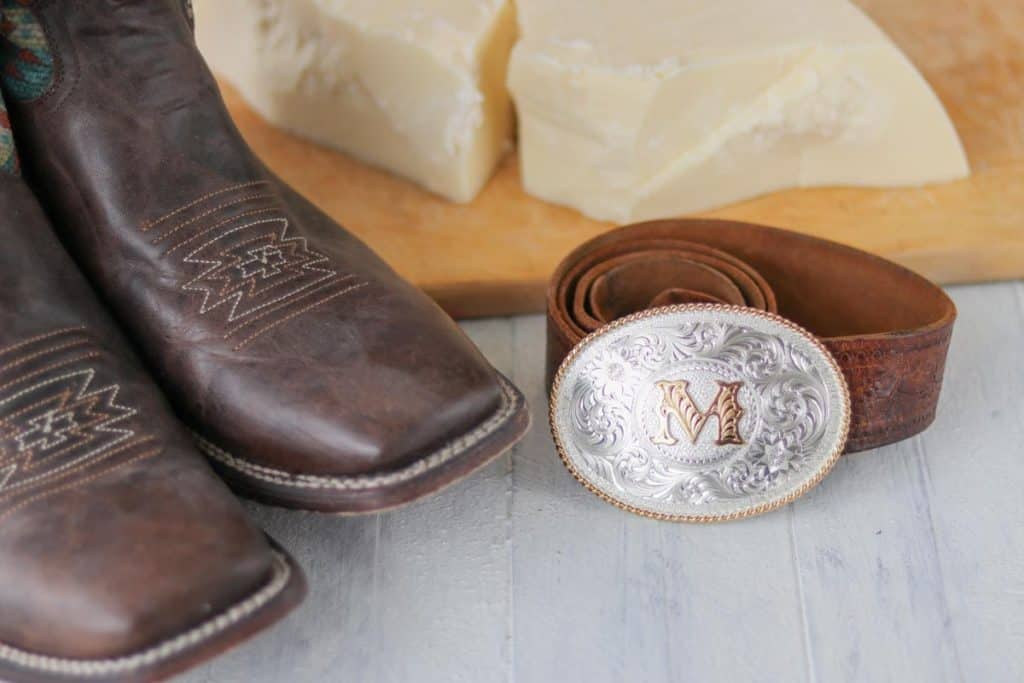
Tallow is one of the best natural leather conditioners. I use it for boots, belts, saddles, leather bags, baseball gloves, and anything else that needs nourishing and waterproofing. Just rub a small amount in, let it soak overnight, and buff with a soft cloth.
Waterproofing fabric and canvas
Historically, tallow was rubbed into canvas, leather, and even wooden tool handles to make them water resistant. You can still do this today with canvas bags, work jackets, and outdoor gear.
Lubricating tools and machinery
Tallow makes a great lubricant for hinges, moving parts, tool joints, and machinery. It coats metal without leaving a sticky residue and helps prevent rust.
Gun oil
Historically, tallow was used to lubricate firearms and prevent rust. Many traditional gun owners still use it for this purpose.
Wood conditioning
Beyond kitchen cutting boards, tallow works on wooden tool handles, axe handles, hammer handles, and outdoor wooden surfaces. It penetrates deeply and protects the grain.
Bird feed and animal feed supplement
Tallow can be mixed with seeds to make suet cakes for backyard birds in winter, or used as a calorie supplement for working dogs.
How to make tallow at home
Making your own tallow is one of the most satisfying traditional kitchen skills you can learn. All you need is some good beef fat, a slow heat source, and a few hours of patience.
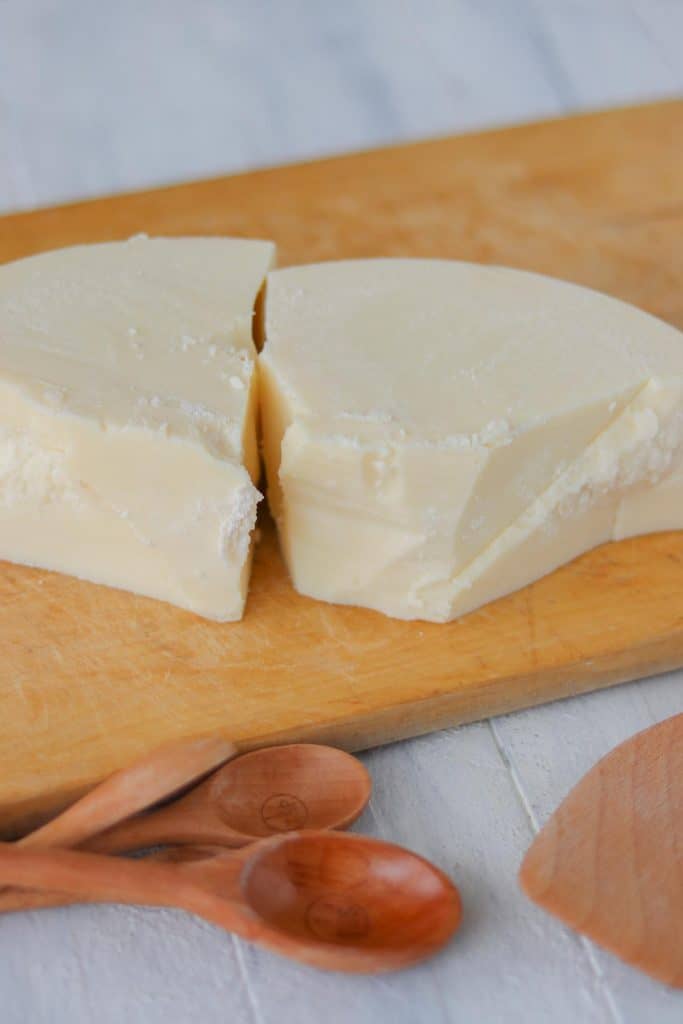
There are two main rendering methods: the wet method and the dry method. I prefer the wet method when I’m making tallow for skincare and soap because it produces snow-white, odorless tallow. Here’s my full wet rendering tutorial.
If you’re just rendering tallow for cooking and don’t need the cleanest possible result, the dry method is faster and easier. Here’s my easy crockpot dry rendering method.
If you want to know more about beef tallow before you start, including the basics of soap making safety (important if you’re going to make tallow soap), I have a few foundational posts to read first.
Where to buy beef tallow
If you’d rather buy tallow already rendered, here’s how I think about sourcing it. I put together a more detailed guide to where to buy tallow here, but here’s the quick version:
- Local farms raising 100% grass fed, grass finished cattle. This is the gold standard. Ask for leaf fat or suet specifically if you’re rendering it yourself.
- Local butchers. Many will sell beef fat trimmings for very little, and some will grind it for you for a small fee, which makes rendering much faster.
- Your local Weston A. Price Foundation chapter food sources list. This is the easiest way to find pasture-raised farms near you.
- Online sources like Fatworks if you don’t have local options. They sell high-quality, already-rendered grass fed tallow.
Frequently asked questions about beef tallow
Beef tallow from 100% grass fed, grass finished cattle is a nutrient-dense, traditional fat that has been eaten for thousands of years. It is rich in fat soluble vitamins, anti-inflammatory CLA, and stable saturated fats that hold up to high-heat cooking without oxidizing. In my experience as a Certified GAPS Coach, families who include traditional animal fats like tallow in their diet tend to feel more nourished and satisfied with their meals.
Not quite. Suet is the raw, unrendered fat from around the kidneys and internal organs of cattle. Tallow is what you get after you render that suet down. People sometimes use the terms interchangeably, but technically, suet is the starting material and tallow is the finished, shelf-stable fat.
Properly rendered tallow is very shelf stable. It will last several weeks at cool room temperature, several months in the refrigerator, and a year or longer in the freezer. The main thing that shortens its shelf life is moisture, so make sure no water gets into your storage jar.
Properly rendered tallow has a mild, savory, slightly beefy flavor. Tallow rendered using the wet method is the most neutral, almost flavorless. Tallow rendered using the dry method has a more pronounced beefy aroma, which is wonderful for cooking but not what you want for skincare.
It depends on how it’s rendered. Wet-rendered tallow is essentially odorless and is what you want for skincare and soap. Dry-rendered tallow has a mild beef aroma. Tallow that smells strong, rancid, or off has gone bad and should not be used.
This is something to discuss with your healthcare provider. Most people with beef sensitivities can tolerate topical tallow because the proteins that typically trigger reactions are removed during the rendering process. But every body is different, and if you have a serious beef allergy, always patch test first and work with a qualified provider.
Yes. In my experience as a Certified GAPS Coach, grass fed tallow can be a valuable part of a gut-healing diet. It provides fat soluble vitamins, anti-inflammatory fatty acids, and supports liver and bile function, all of which play an important role in gut wellness. Dr. Natasha Campbell-McBride recommends generous amounts of animal fat on the GAPS diet, and she observes that higher fat intake tends to correlate with quicker healing progress. I wrote a full post on tallow and gut health here.
The best tallow for skincare is wet-rendered tallow from 100% grass fed, grass finished cattle, ideally from leaf fat (the fat from around the kidneys). This combination gives you the cleanest, whitest, most nutrient-dense tallow with the most neutral aroma, perfect for face creams, balms, and other products you want to feel and smell beautiful.
Several weeks at cool room temperature, several months in the refrigerator, and a year or longer in the freezer. Tallow is one of the most shelf-stable traditional fats because it is highly saturated and contains very little moisture.
In most savory cooking applications, yes, tallow and lard can be used interchangeably with butter or coconut oil, with adjustments for flavor. In skincare, tallow has a different consistency and chemistry than coconut oil, so direct one-to-one substitution doesn’t always work. Always follow the original recipe if it specifies a particular fat for a particular reason.

All my beef tallow recipes and guides
If you want to dive deeper into any of the uses above, here are every tallow-related post on the site, all in one place.
How to make and source tallow
- How to render and purify tallow so it is odorless and white
- Easy crockpot method for rendering tallow
- Where to buy beef tallow
- Tallow vs. lard: what’s the difference?
Tallow for cooking
Tallow skincare recipes
- How to make tallow balm
- DIY tallow face moisturizer
- Tallow lotion recipe
- Tallow lotion bar recipe
- Tallow lip balm with honey
- Tinted tallow lip balm with honey
- Tallow sunscreen recipe
- Homemade sun protection balm
- Whipped tallow sugar scrub for the face
- Whipped tallow salt scrub for the body
- DIY shaving cream with tallow
- Tallow shaving butter
- After shave lotion
- Oil cleansing with tallow
- Tallow balm for dry skin, eczema, and acne
- Homemade eczema cream
- Diaper rash cream with grass fed tallow
- Herb-infused tallow salve
- Black drawing salve with tallow
- Homemade vapor rub with essential oils
- Homemade deodorant stick
- DIY natural tallow deodorant
- Complete guide to tallow skin care
Tallow for hair
Tallow soap making
- Pure tallow soap recipe
- How to make tallow soap, DIY tutorial
- Liquid tallow soap recipe
- Why add tallow to soap
- Soap making basics and safety
Tallow for candles and home
Tallow and gut wellness
What is your favorite way to use tallow?
Share your favorite beef tallow uses in the comments!
Ready to put all that tallow to good use?
Now that you know all the ways tallow can serve your family, you’ll want recipes to actually make all of them. My Natural Living Recipes book has all the recipes I use for my family, from tallow balm and soap to face cream, lip balm, candles, deodorant, and dozens more nourishing DIYs. It’s the natural living library I wish I’d had when I was starting out.
👉 See what’s inside the Natural Living Recipes book
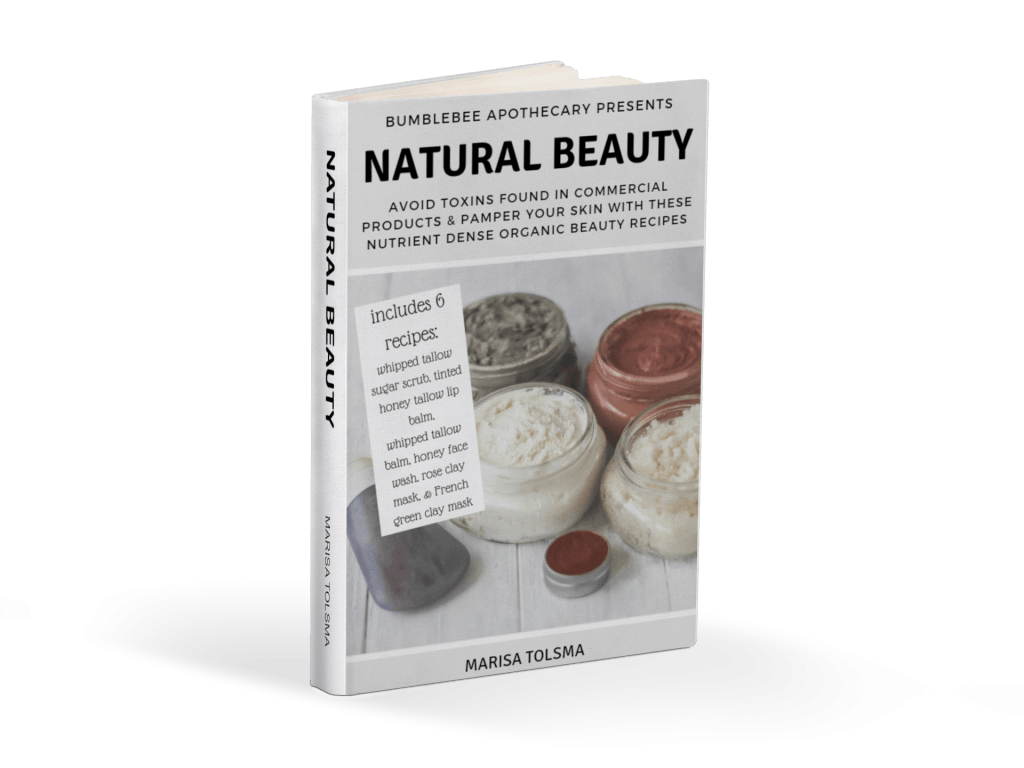
Join our traditional wisdom community, and grab a free natural beauty recipes eBook when you subscribe!
Shop this post
Organic, 100% grass fed tallow
Want to pick up a handmade tallow soap or balm?
Check out the Bumblebee Apothecary Shop here.
Follow along with Bumblebee Apothecary
Thanks for stopping by! Be well! 🐝